
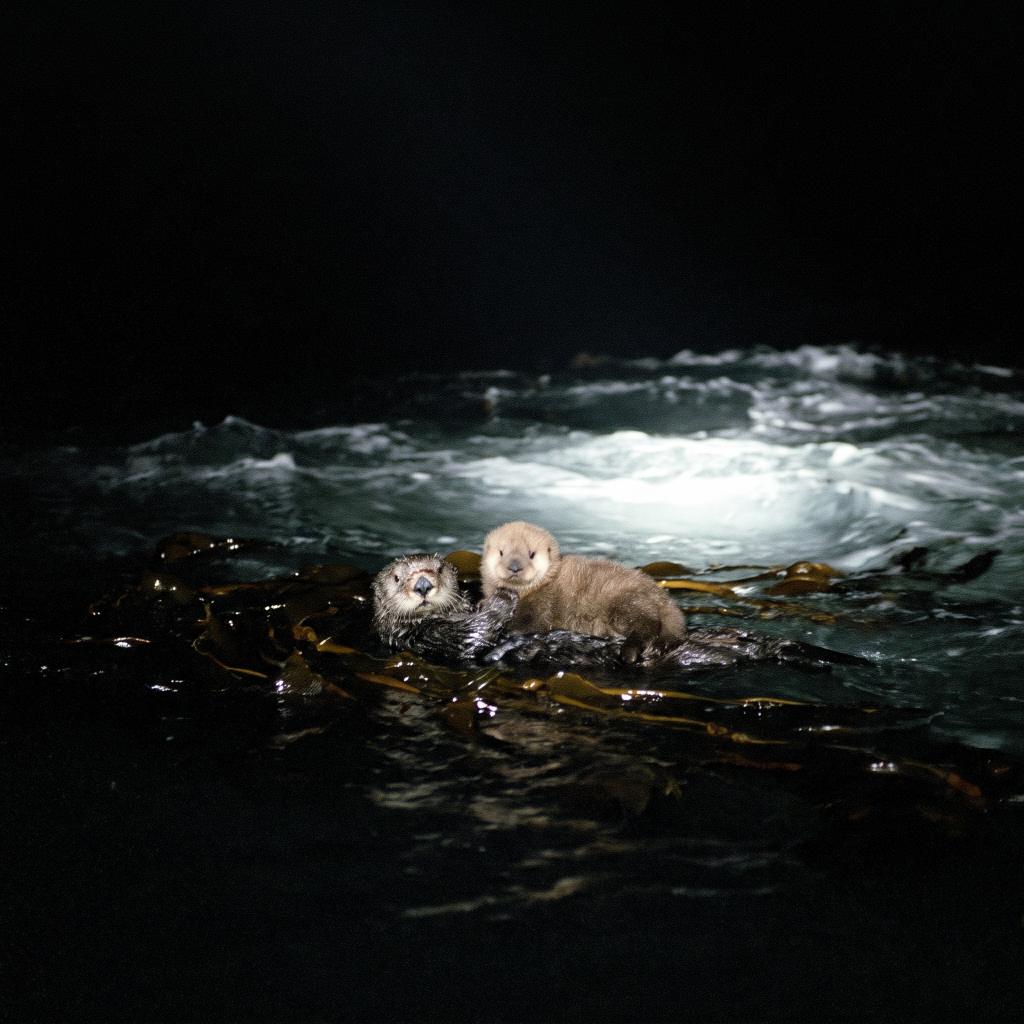
In 1991, a wild female sea otter off California's Monterey coast lost her pup and kept swimming through the bay calling for it. Inside the Monterey Bay Aquarium, an orphaned pup named Elwood was crying for his mother. Aquarium staff decided to load Elwood onto a boat and try to bring the two together.
A stranded sea otter pup has almost no chance of surviving alone in the Pacific. Young pups are born with thick, buoyant baby fur that keeps them bobbing on the surface like corks, making it impossible to dive for food. Without a mother to keep that coat groomed for insulation and bring shellfish up from the seafloor, an orphan quickly loses body heat.
At the time, years before the aquarium developed its well-known program pairing orphans with captive surrogate mothers, biologists were still looking for ways to get rescued pups back into the wild without them bonding to humans. Hand-reared otters often struggled to forage or stay wary of boats. Matching Elwood with a wild female who was actively searching for a lost pup was a long shot, but it was his best chance at a normal life.
The crew motored out into the bay, located the calling female, and set Elwood in the water nearby. At first, she swam over to look at the crying pup. Then she backed away and swam off.
For the rest of the afternoon, Elwood drifted on the surface. Raising a pup in cold coastal water takes an enormous amount of energy, and a wild female rarely adopts an unrelated orphan unless her maternal drive is still running high right after a loss. As daylight began to run out, it looked like the attempt had failed.
The crew could not leave a helpless pup drifting alone in the open ocean after dark. They turned the boat around and motored back to pull Elwood out of the water. Just as they reached him, the wild female surfaced right beside the pup and grabbed him before swimming away.
Staff backed off and gave the pair space. They did not need an electronic tag to follow what happened next. Adult female sea otters often carry distinctive pale scars on their noses from mating, and biologists already recognized this female by her face and the specific scar across her nose.
Over the next three months, aquarium staff tracked the pair along the Monterey coast. They watched the scarred female carry Elwood on her chest and raise him as her own, keeping his fur groomed and sharing food from her dives.
Southern sea otter pups normally stay with their mothers for about six months before going independent. Based on how steadily Elwood was growing during those months of monitoring, researcher Michelle Staedler believed he probably made it all the way to weaning.
Sightings of the pair ended after three months, leaving the rest of Elwood's life unrecorded in the kelp beds of central California. In the aquarium's early records, the rescue stood out for how close it came to ending back on the boat, seconds before a wild mother surfaced to claim him.
Image is for illustration purposes only
Source: Monterey Bay Aquarium / Michelle Staedler firsthand account (1991)