
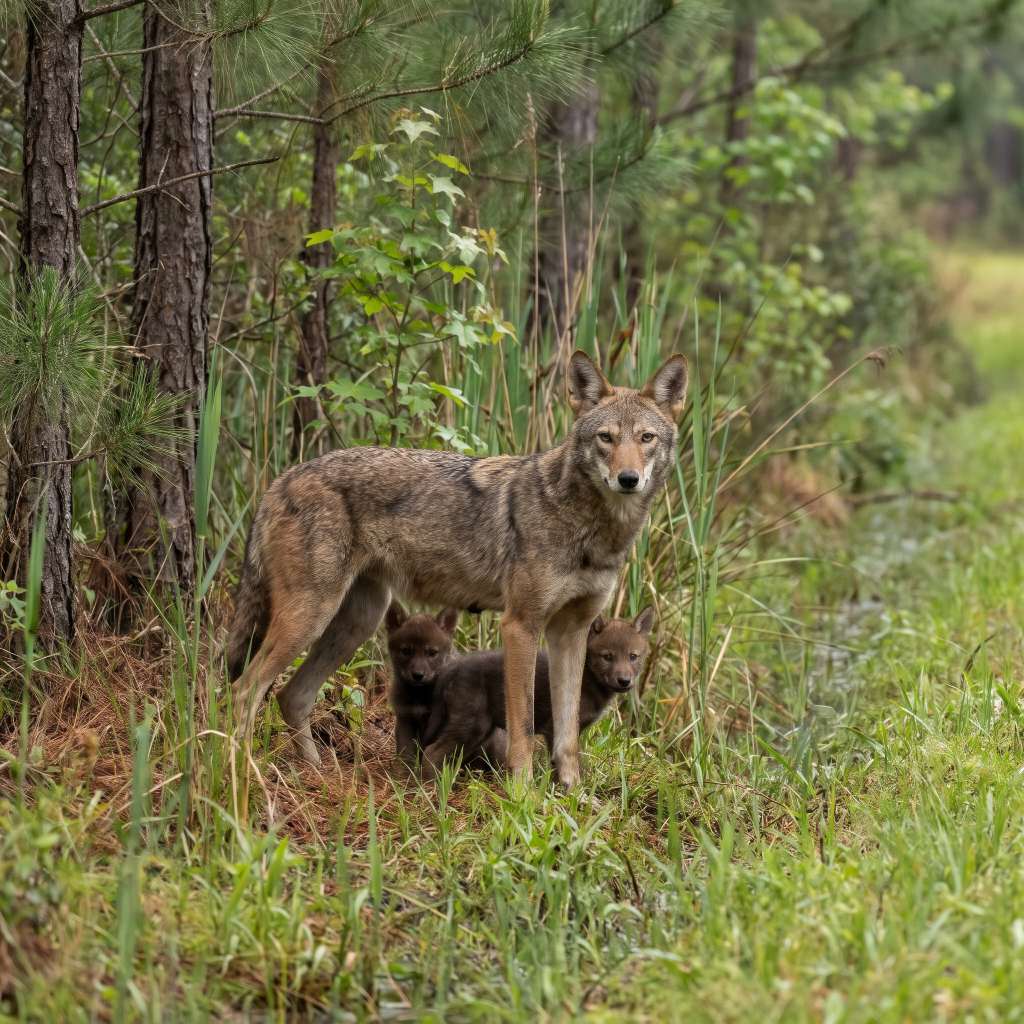
When reports of an injured red wolf in eastern North Carolina led federal biologists to a female known as Skye in October 2024, the young wolf was limping from a severe leg wound likely inflicted by another animal, facing a life-threatening infection in one of the world's most endangered wild canid populations.
Once common across the southeastern United States, the American red wolf was declared extinct in the wild in 1980 before a fragile reintroduced population was established on the Albemarle Peninsula of North Carolina. With only a few dozen red wolves living outside captivity, every breeding-age female carries enormous weight for the survival of the species.
Designated officially as 2409F, Skye was captured by U.S. Fish and Wildlife Service recovery staff and transported to the North Carolina State University College of Veterinary Medicine. There, veterinarians treated her badly damaged leg over the course of several weeks, keeping her off the landscape until the wound closed and her strength returned.
Rather than releasing Skye back into the woods alone after she healed, recovery biologists transferred her to a large, forested acclimation pen inside Alligator River National Wildlife Refuge and paired her with an adult male red wolf, 2371M. Acclimation pens give newly paired wolves time to bond away from road traffic and territorial rivals while still living in natural coastal plain habitat.
The pairing took hold quickly. While still inside the refuge enclosure, Skye gave birth to a litter of three pups. Two of the pups survived their critical early weeks, and in May 2025, the recovery team opened the pen and released the entire family unit together into the wild, sending both adult wolves and their two young pups out onto the peninsula as an intact pack.
The true payoff of that winter rescue arrived the following spring. Rather than splitting up or struggling to find territory, Skye and male 2371M stayed together and established a den site on private land out in the wild, producing a second litter of pups without any enclosure walls around them.
When U.S. Fish and Wildlife Service biologists tracked the family to the den that spring, they located two wild-born pups, one male and one female, and confirmed that both were healthy and thriving under ongoing field monitoring. The same recovery crew that had once been forced to trap Skye to save her leg was now handling her wild-born offspring for their first routine health checks.
Image is for illustration purposes only
Source: U.S. Fish and Wildlife Service Red Wolf Recovery Program / North Carolina Wildlife Federation / NC State University College of Veterinary Medicine (2024-2026)