
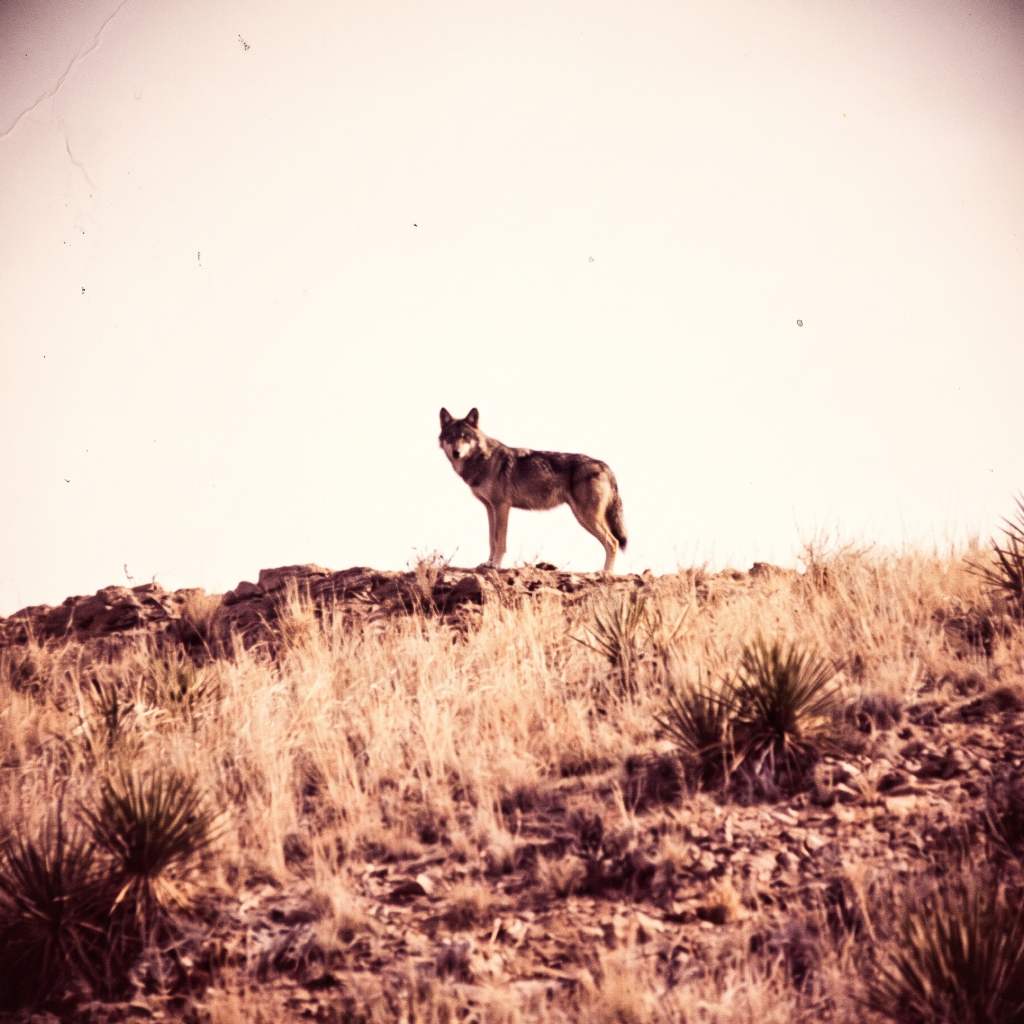
Gray wolves were once common across much of Texas, mainly west of central Texas, in the plains and mountain country. Ranchers, bounty hunters and government trappers worked for decades to wipe them out with traps, guns and poison. By the early 1940s, the native wolves of Texas were gone.
After that, only wanderers turned up. In 1941, a wolf was killed near Fort Davis in West Texas. It was a Mexican gray wolf, a smaller subspecies that lived mainly in Mexico, and biologists of the time thought it had probably drifted up from northern Chihuahua.
Then came December 1970, in the Big Bend region. On December 5, a gray wolf was shot on the Cathedral Mountain Ranch, 17 miles south of Alpine in Brewster County. A few weeks later, a second wolf was caught in a trap on the Joe Neal Brown Ranch, near the point where Brewster, Pecos and Terrell counties meet. It was found dead in the trap several days before December 28. Both were males.
Their skulls went to Sul Ross State University in Alpine. Biologist James Scudday recorded both wolves in the Journal of Mammalogy in 1972. Decades later, a 2017 study by wildlife biologists measured the two skulls again and found they matched Mexican wolves.
No one knows exactly where the two wolves came from or what route they took. Texas Tech University's account of the state's mammals calls them the last authenticated Texas gray wolf records and says they were probably migrants from Mexico. By then, Mexican wolves were rare on both sides of the border. When they were listed as endangered in 1976, only remnant numbers survived in the Mexican states of Chihuahua and Durango.
In 1977, the U.S. began capturing the last wild Mexican wolves for a captive breeding program. Starting in 1998, the program released their descendants in Arizona and New Mexico, and by 2025 at least 319 wolves lived in the wild there. Mexico began its own releases in Sonora and Chihuahua in 2011, and roughly 45 wolves now live in the wild in Mexico.
Texas still has none. Neither Texas Parks and Wildlife nor the U.S. Fish and Wildlife Service has any record of a wolf dispersing into the state. The closest call came in 2017, when Mexican biologists tracked a radio-collared wolf from near Ciudad Juárez to Mount Cristo Rey, a peak that overlooks El Paso. It stayed a few days and went back into Mexico.
In April 2026, the Texas Department of Agriculture posted photos of a Mexican wolf at a livestock export facility in Laredo and wrote that history was in the making. The post caused panic among ranchers until Texas Parks and Wildlife explained. The wolves were being trucked through Texas under federal escort on their way to release sites in Mexico. The agency said no wolves had been released in Texas and there were no plans to release any. The gray wolf is still listed as endangered under both Texas and federal law.
Image is for illustration purposes only.
Source: Scudday, Journal of Mammalogy (1972) / Texas Tech University, The Mammals of Texas / Heffelfinger et al., Journal of Wildlife Management (2017) / Texas Parks and Wildlife Department (April 2026) / Arizona Game and Fish Department (2026) / Outdoor Life (2026)