If you spend enough time watching predators operate in the northern Rockies, you start to view the landscape purely in terms of calories and risk. For a gray wolf living in the Yellowstone ecosystem, survival is a brutal, high-stakes math problem. Their primary currency is elk, and an elk is not an easy animal to put on the ground.
When you picture a wolf hunt, you might imagine a pack of highly coordinated animals flowing over the snow like water, taking down prey with flawless tactical precision. The reality is usually a lot uglier. A mature cow elk weighs around five hundred pounds. She is heavily muscled, desperate, and armed with sharp hooves that are fired off with enough kinetic energy to shatter a wolf’s jaw or cave in its ribs. Because a northern Rocky Mountain gray wolf generally tops out around ninety or a hundred pounds, the weight discrepancy is staggering. To bridge that gap, wolves rely on the pack. It takes multiple animals to harass the flanks, nip at the hamstrings, distract the front end, and eventually exhaust the prey to the point of collapse.
A single wolf trying to pull down a healthy, full-grown elk on its own is usually committing suicide. The mechanics just aren't there.
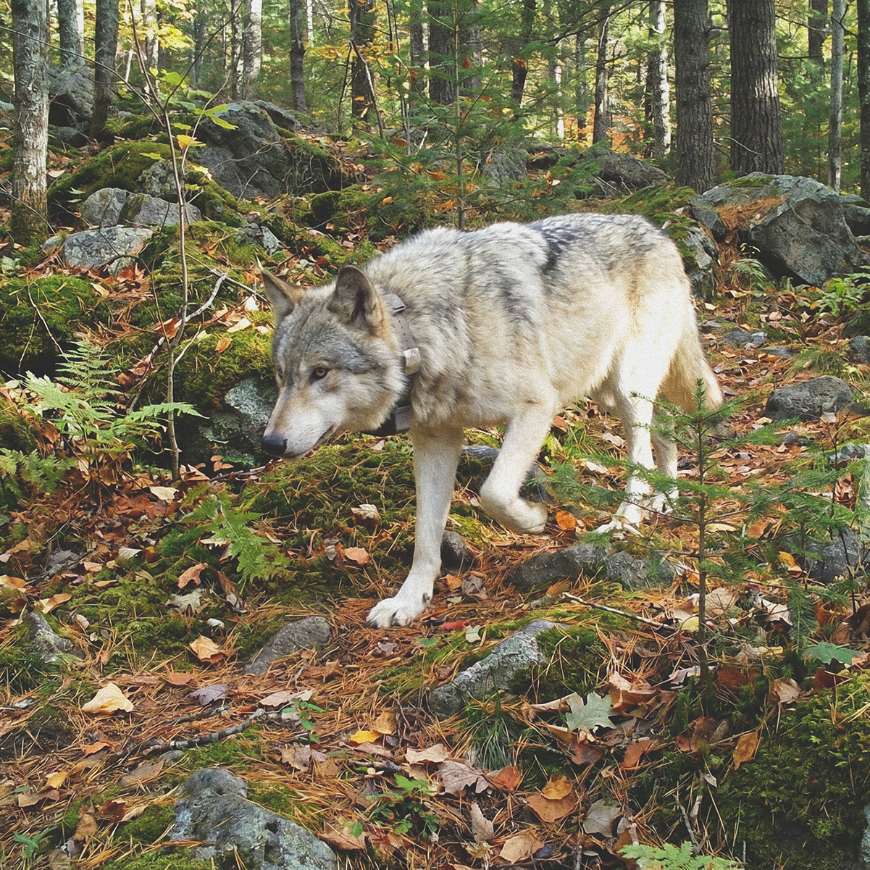
But every once in a while, nature produces an absolute biological freak. In the mid-2000s, Yellowstone birthed a wolf that completely ignored the standard rules of engagement. Known officially to the park as 832F, and to the public as the ’06 Female (named for her birth year), she was the alpha female of the Lamar Canyon Pack. She was a massive, barrel-chested canine with a distinct gray and silver coat, and she possessed a level of predatory efficiency that left veteran wildlife biologists shaking their heads.
The ’06 Female didn't just participate in pack hunts. She routinely handled the heavy lifting entirely by herself. Park researchers, watching through high-powered spotting scopes from the roadways of the Lamar Valley, documented her pulling off a mechanical rarity time and time again.
She would isolate a full-grown adult elk in the deep winter snow. Instead of waiting for her subordinates to catch up and divide the risk, she would push straight through the defensive kicks. Her signature move was securing a locking bite directly on the elk’s throat. Once she had that grip, she didn’t try to out-muscle the animal. She used her own ninety-pound frame as a dead-weight drag anchor. She would simply hold on, absorbing the violent physical thrashing, letting the elk exhaust its oxygen supply while dragging her through the snow. Eventually, the five-hundred-pound animal would suffocate and collapse.
When you have a single predator altering the landscape with that kind of extreme efficiency, it catches the attention of the people managing the ecosystem. The Yellowstone Wolf Project, which had been monitoring the restored population since they were dumped out of crates back in 1995, realized they had something unique on their hands. They needed to know exactly how this specific wolf was moving, where she was denning, and how she was manipulating the winter range.
To get that data, they had to collar her.
If you read the mainstream news articles about 832F, you'll constantly see a reference to her wearing a "$4,000 GPS collar." People read that number and think of a fancy dog collar sitting on a shelf. What that figure actually represents is the literal hardware—a thick, heavy, plastic-encased telemetry unit built to survive the absolute worst conditions North America can throw at it. But the actual cost of getting that piece of hardware onto a wild, uncooperative apex predator is astronomical.
To collar a wolf in the Yellowstone backcountry, you have to initiate a massive logistical operation. You have to charter a specialized helicopter and a pilot who has the nerve and the skill to fly skids-down in the heavy timber, hovering just feet above a running pack in sub-zero temperatures. You are paying for aviation fuel, insurance, and the specialized aerial gunner hanging out the open door with a net gun or a tranquilizer rifle. You are paying for the chemical immobilization drugs that keep the animal sedated safely, the veterinary gear used to draw blood and take genetic samples on the snowpack, and the monthly satellite subscription fees required to actually bounce the GPS data from the wilderness to a computer in a warm office.
Wolf 832F wasn’t just a wild dog; she was a walking, breathing, high-resolution data point in a multi-million-dollar scientific enterprise. And because she operated in the Lamar Valley—one of the most accessible and visible corridors of the park—she became the undisputed star of a massive wildlife tourism industry. Photographers, wolf-watchers, and tourists from around the globe spent thousands of dollars on flights, hotels, and spotting scopes just to stand on the side of the road in the freezing cold and hope for a glimpse of her. She was, without exaggeration, an economic engine for the local gateway communities.
Inside the borders of Yellowstone National Park, 832F was treated like a protected national monument. But wild animals do not care about the boundaries we draw on our topographical maps. They operate on the primal laws of food, weather, and pressure.
In December of 2012, the heavy winter snows began pushing the elk herds out of the high country and toward the lower elevations. The Lamar Canyon Pack, driven by the biological necessity to stay with their food source, followed the migration eastward. They traveled through the timber, crossed the invisible administrative boundary of the National Park, and stepped out into the Shoshone National Forest in the state of Wyoming.
That specific winter was a landmark moment for wildlife management in the West. It marked the first time Wyoming had instituted a legally regulated, open hunting season for gray wolves since the animals had been reintroduced. The state game and fish department had set specific harvest quotas based on their own population models, aimed at managing predator numbers in areas where they conflicted with livestock and traditional big game herds.
The moment 832F’s paws crossed that invisible line out of Yellowstone, her status fundamentally inverted. She went from being the untouchable centerpiece of a multi-million-dollar federal research project to being a legally classified game animal in a state management zone. The $4,000 collar around her neck, which was meant to transmit data on her survival, ended up marking her exact location during a legal hunting season.
On a cold day about fifteen miles east of the park boundary, a hunter with a valid Wyoming wolf tag spotted her. He leveled his rifle, pulled the trigger, and killed the most famous wolf in the world.
He didn't break a single law. He wasn't a poacher operating in the dark. He was participating in a highly regulated, state-sanctioned harvest. But when the news broke that the ’06 Female had been legally shot, the internet absolutely exploded.
The fallout was immediate and visceral. The New York Times ran multiple stories. International news outlets picked it up. Wolf advocacy groups and tourists who felt a deep, personal connection to 832F were outraged, calling for an end to predator hunting and demanding a buffer zone around the park. On the other side, local ranchers, hunters, and state biologists defended the harvest, pointing out that wolves are a renewable resource that must be managed like any other large predator outside the confines of a protected park.
The death of 832F perfectly encapsulates the fractured reality of the North American landscape. We want our wildlife to be wild, but we try to manage them with rigid, human constructs. We invest massive amounts of money, technology, and emotion into individual animals, forgetting that nature is entirely unsentimental.
Out there in the sagebrush and the timber, there are no legends. There are just animals trying to secure their next meal, and the brutal reality that the difference between a protected life and a legal harvest is often just an invisible line in the snow.