
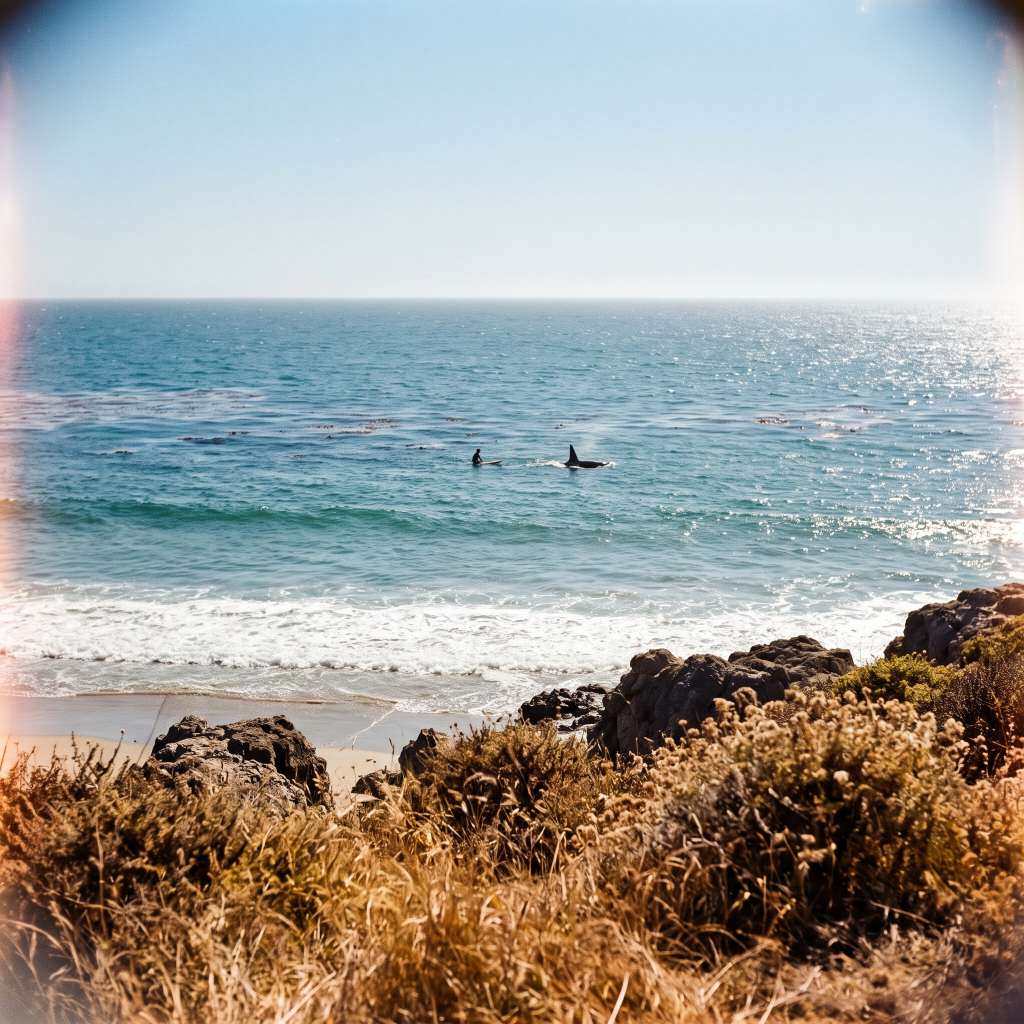
The only well-documented wild orca bite on a human happened off the California coast more than half a century ago, and the whale let go on its own.
On the morning of September 9, 1972, 18-year-old Hans Kretschmer was surfing with two friends at Point Sur. The water was calm and clear, and sea lions had been swimming in the waves nearby.
When something nudged Kretschmer from behind, he assumed it was one of his friends joking around or a curious sea lion. He looked over his shoulder and saw a glossy black head bearing down on him. An orca roughly 20 feet long clamped down on his leg.
Kretschmer lost his surfboard and punched the animal repeatedly until its jaws opened. Convinced a second strike was coming, he swam roughly 130 feet to shore while yelling warnings about a shark. He made it onto the beach alive and needed 100 stitches to close the wounds on his leg.
More than 50 years later, the Point Sur encounter remains the lone credible record of a wild killer whale biting a person. Marine biologists widely treat the incident as a case of mistaken identity. Floating in a dark wetsuit in surf frequented by sea lions, Kretschmer closely resembled the marine mammals that transient orcas hunt along the California coast.
To researchers, the telling detail is not that a whale bit him. A 20-foot apex predator built to bring down sea lions and large whales could have easily dragged a teenager under. Instead, the animal broke off the encounter the moment it realized what was in its mouth, never pursuing him as he swam to the beach.
A similar near-miss unfolded in August 2005 in Helm Bay near Ketchikan, Alaska. Twelve-year-old Ellis Miller was swimming in four feet of water when a 25-foot transient orca moved in and bumped his shoulder. Harbor seals regularly used the bay, and experts concluded the whale mistook the splashing boy for prey before recognizing the error and veering away without biting.
The reason wild orcas leave people alone comes down to how strictly they eat. Killer whale populations around the world rely on culturally learned diets passed down through their families, specializing in particular fish or marine mammals. Humans have never been part of that menu.
Paired with sharp vision and echolocation, that rigid dietary tradition keeps wild orcas from treating swimmers as food. On the one documented morning when a hunting whale misread the silhouette off Point Sur, it corrected the mistake in seconds.
Image is for illustration purposes only
Source: Lodi News-Sentinel (September 12, 1972) / Erich Hoyt, The Performing Orca (1992) / Associated Press (August 2005) / Orcazine (2013 interview with Hans Kretschmer)