
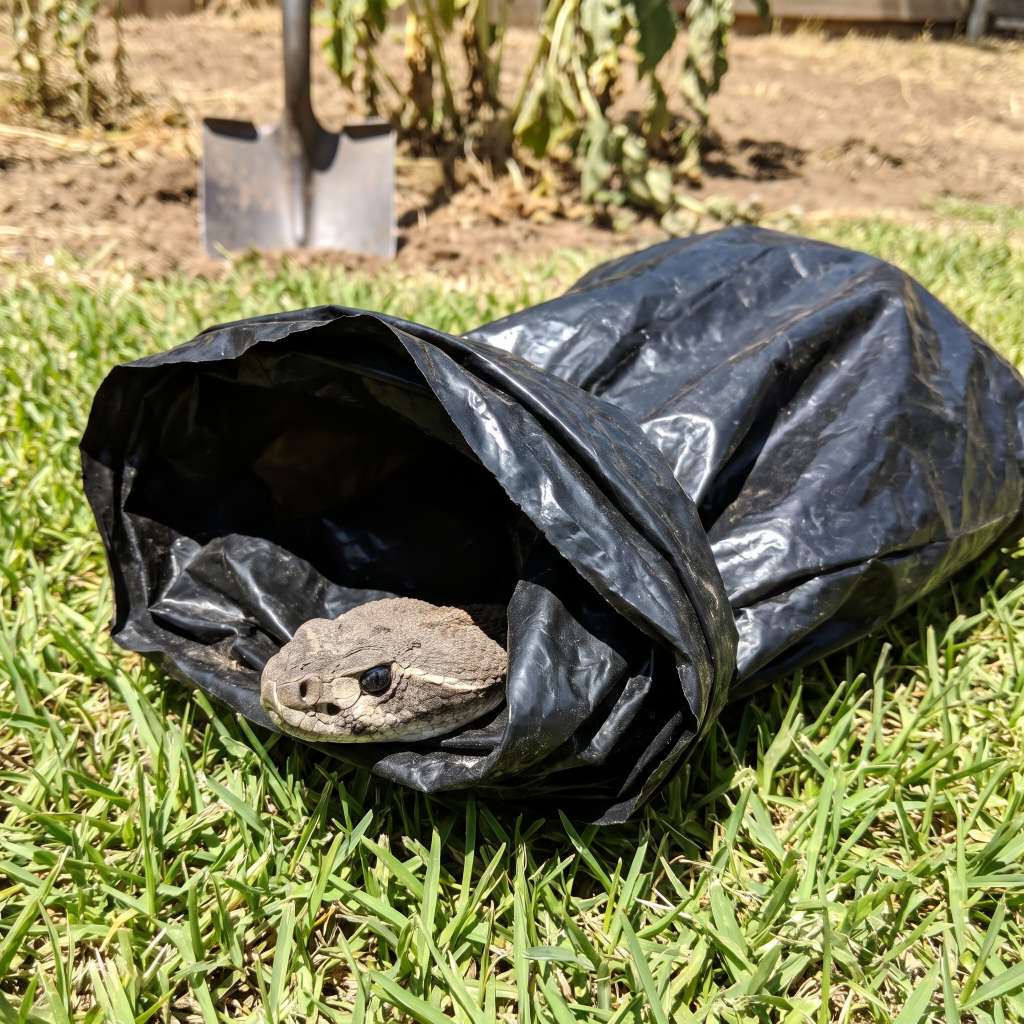
In May 2018, a man doing yard work near Lake Corpus Christi, Texas, cut the head off a four-foot rattlesnake with a shovel. When he bent down to throw it away, the head bit him.
It was Memorial Day weekend, May 27. His wife was pulling weeds in a flower bed at their home in South Texas when she found a western diamondback rattlesnake hiding among the plants. She screamed, and her husband, who had been mowing the lawn, came over, grabbed a shovel and cut off the snake's head. The couple had small dogs, and a grandchild who sometimes stayed with them.
Moments later, he bent down to pick up the pieces, and the severed head clamped onto his hand.
His wife called 911 and started driving him to a hospital in Corpus Christi, about 45 miles away. Before they got there, he was having seizures and losing his vision, and he was bleeding internally. An air ambulance met them on the way and flew him the rest of the distance. Doctors told her he might not survive.
He needed 26 doses of antivenom. A typical rattlesnake bite patient gets two to four. He pulled through and was listed in stable condition, but news reports said his kidney function was still impaired.
Doctors had seen this kind of case before. In 1999, two emergency physicians at Good Samaritan Regional Medical Center in Phoenix, Arizona, published a short report in the New England Journal of Medicine. Between June 1997 and April 1998, their toxicology center admitted 34 patients for rattlesnake bites. Five of them, about 15 percent, had been bitten by a snake that was fatally injured and that they believed was already dead. All five were men between 20 and 48.
One of them had shot a rattlesnake and then cut off its head. When he picked the head up, it bit his finger. The damage to the tissue was severe enough that the finger later had to be amputated. Another man was bitten on two fingers by a severed head that had been lying still for five minutes.
A rattlesnake's head can keep biting after it is cut off because the nerves and muscles in the head go on working by reflex for some time. Herpetologist Laurence Klauber, who studied rattlesnakes for decades, concluded that a severed head stays dangerous for 20 to 60 minutes after decapitation.
Image is for illustration purposes only
Source: KIII-TV / Global News / Snopes (2018) / Suchard, J. R., and LoVecchio, F. (1999), Envenomations by Rattlesnakes Thought to Be Dead, New England Journal of Medicine 340(24): 1930 / Klauber, L. M., Rattlesnakes: Their Habits, Life Histories, and Influence on Mankind