
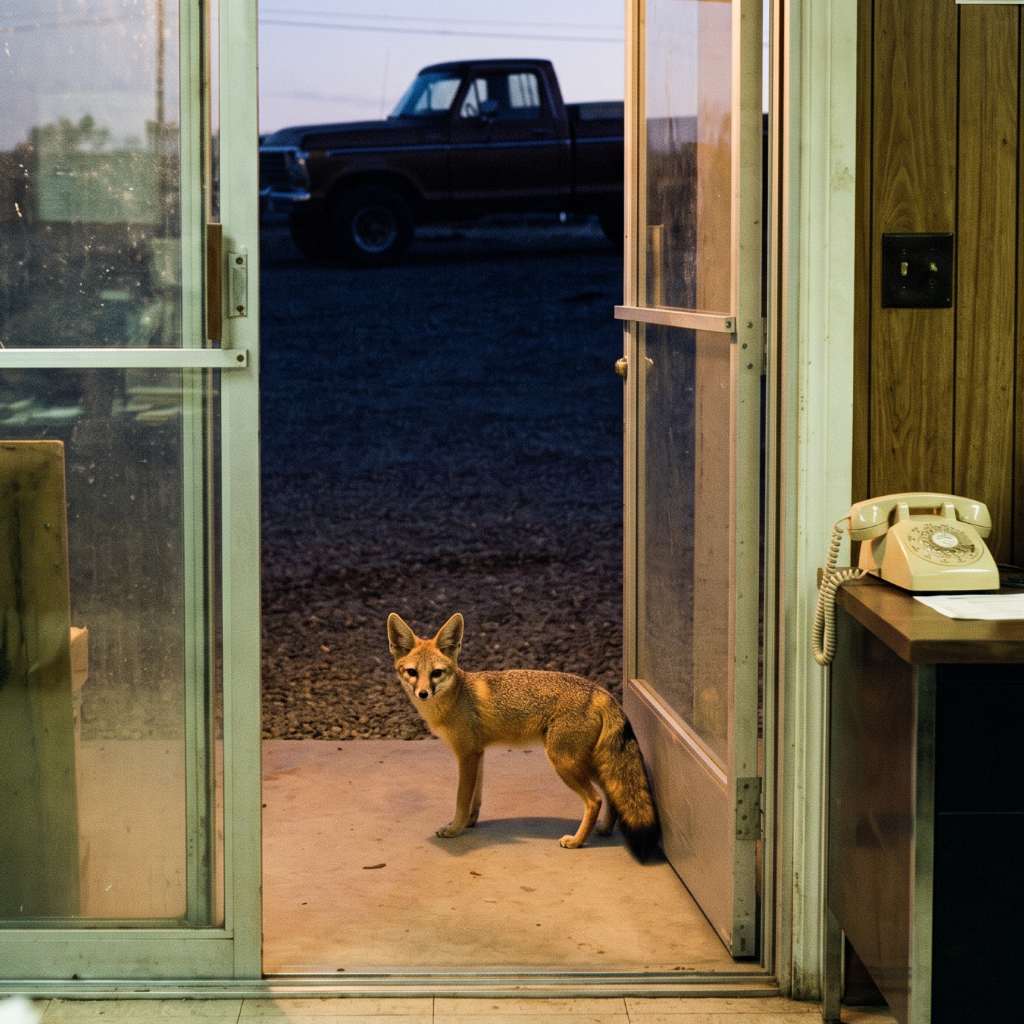
In the 1980s, California State University, Bakersfield biologist Ted Murphy began tracking a strange twist in California wildlife conservation. Listed as a federally endangered species since 1967, the San Joaquin kit fox had lost roughly 90 percent of its native alkali sink and saltbush scrub habitat across the San Joaquin Valley to irrigated agriculture and oil fields. Out in the open wildlands, the house-cat-sized desert canid was struggling against habitat loss and coyote predation. Right inside the city limits of Bakersfield, however, a substantial population of kit foxes was quietly thriving.
One of those urban survivors lived on the grounds of a local sanitation business run by Delbert Bowen. Every morning when Bowen pulled into the yard for work at 4 a.m., a wild female kit fox was waiting to greet him. The diminutive fox, weighing barely five pounds with oversized ears built to radiate desert heat, would trot right behind Bowen to the office door and sit patiently until he tossed her a stale plain cake doughnut.
When Bowen contacted Murphy to tell him about the fox living on the property, the biologist saw a prime opportunity to fit her with a radio telemetry collar and study how she navigated the industrial blocks of the city. Arriving at the yard, Murphy set a standard wire box trap and baited the back of the cage with pungent canned sardines, the go-to lure wildlife researchers use to pull small carnivores across a trap treadle.
The female kit fox walked up to the wire mesh, smelled the fish, and refused to step inside. According to Bowen, she lingered outside the trap entrance ignoring the standard biological bait until he finally pulled the sardines out and replaced them with one of her familiar cake doughnuts. Once the pastry was inside, she walked straight in and tripped the door.
In the wild, San Joaquin kit foxes hunt nocturnal kangaroo rats, pocket mice, ground squirrels, and insects across arid grasslands. Inside Bakersfield, researchers discovered the foxes had adapted to a completely man-made landscape. Golf courses, industrial yards, school campuses, and drainage sumps gave the foxes two advantages they lacked in the surrounding countryside: year-round rodent and insect prey supported by watered turf, and a built-in shield against coyotes, which tended to avoid the fenced, heavily trafficked urban blocks where kit foxes denned under concrete slabs and storage sheds.
Bowen's fox carried on with her 4 a.m. routine until Bowen eventually retired and closed down the sanitation business. With the yard shut and the early-morning doughnut handouts gone, the fox vanished from her usual post.
A couple of years later, Murphy’s phone rang at the university. On the line was a grocery store employee working at a supermarket just a few blocks away from Bowen’s old sanitation lot. The worker wanted to ask the biologist about an endangered kit fox that kept showing up outside the building after hours, turning its nose up at everything else while holding out specifically for plain cake doughnuts.
Because the caller could not read a collar ID, the record leaves open whether a second neighborhood fox had picked up the habit or if Bowen’s old friend had simply found a new supplier down the street.
Image is for illustration purposes only.
Source: National Wildlife Federation, National Wildlife Magazine / California State University, Bakersfield Urban Kit Fox Research / U.S. Fish and Wildlife Service.