A river otter will swim under the ice, enter a beaver lodge through the underwater tunnel, kill the beaver inside its own home, eat it, and then move into the lodge for the winter.
The public image of the North American river otter is so thoroughly sanitized that most people have forgotten what the animal actually is. The viral clips show them sliding down mud banks, chirping at kayakers, and floating on their backs holding hands. What the clips do not show is that the river otter is a mustelid. It shares its direct evolutionary lineage with the wolverine, the honey badger, and the American badger. Every member of that family operates on the same basic principle: disproportionate aggression relative to body size, applied with speed and precision against prey that often outweighs them significantly. The otter simply does it underwater.
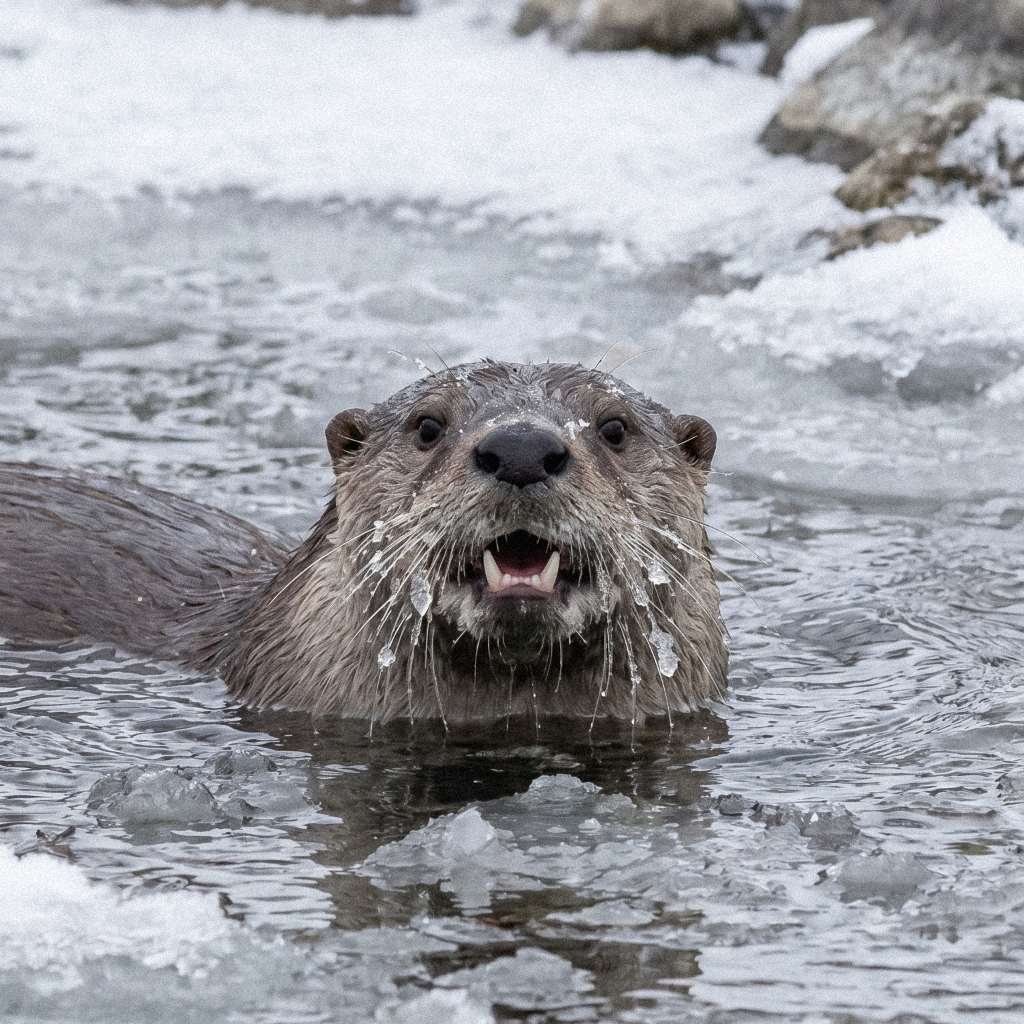
A healthy adult river otter weighs about thirty pounds. It is built long and low, with a dense, waterproof undercoat, a thick muscular tail that functions as both rudder and propulsion, and a set of jaws that can crush fish spines and crayfish shells without effort. In open water during the warmer months, it is a straightforward fish predator. Fast, efficient, and not particularly dramatic. But when the northern rivers freeze over and the easy fishing shuts down, the otter shifts into a mode that reveals exactly what kind of animal it has been all along.
A beaver lodge in winter is one of the most secure structures in the natural world. The walls are a layered matrix of logs, branches, and mud that freeze into something approaching reinforced concrete when the temperature drops. A wolf pack can stand on the roof and dig without getting through. A grizzly, if one were still active that late in the season, would struggle to breach it. The beaver builds the lodge with every entry point submerged below the waterline, accessible only through plunge holes that open beneath the ice. The design assumes that no terrestrial predator can reach the living chamber, and for most of the predator community, that assumption holds.
The otter is not a terrestrial predator. It is more comfortable under the ice than most fish.
Winter track surveys conducted by wildlife biologists across the northern states and Canada have documented the sequence repeatedly. Otter tracks in the snow approach the beaver lodge from the river. The tracks end at an opening in the ice near the lodge. Below the surface, the otter navigates the frigid, pitch-dark water beneath the ice shelf, locates the submerged entrance tunnel, and swims upward into the beaver's living chamber.
What happens inside the lodge is a fight that takes place in total darkness in a space roughly the size of a kitchen table. An adult beaver can weigh sixty pounds, sometimes more. It is armed with incisors that can fell a six-inch hardwood tree, and in the confined space of its own lodge, it has nowhere to retreat, which means it will fight. But the beaver is a rodent built for construction and dam engineering. It is not built for close-quarters combat against a predator that is faster, more flexible, and specifically designed for killing in exactly these conditions. The otter is quicker in the tight space. It can twist its body in ways the beaver cannot match. It targets the back of the neck or the base of the skull, locking on with a bite that the beaver cannot reach to counter.
The aftermath tells the story. Biologists checking lodges in late winter have found beaver remains pushed down through the plunge hole and left under the ice below the lodge. The otter does not drag its kill out. It eats inside the chamber, disposes of the remains through the same tunnel it entered, and then stays. The beaver lodge, now empty, is an insulated, weatherproof shelter sitting above the waterline with ready-made access to the river system below the ice. The otter converts it into a base of operations, using the lodge as a warm resting den between hunting forays under the frozen river.
The whole sequence is so efficient that it barely qualifies as predation in the traditional sense. It is closer to a hostile acquisition. The otter identifies the most valuable piece of real estate on the frozen river, eliminates the occupant, consumes it, and takes ownership of the infrastructure. The beaver spent months building a fortress designed to be impenetrable. The otter treated the front door like an invitation.