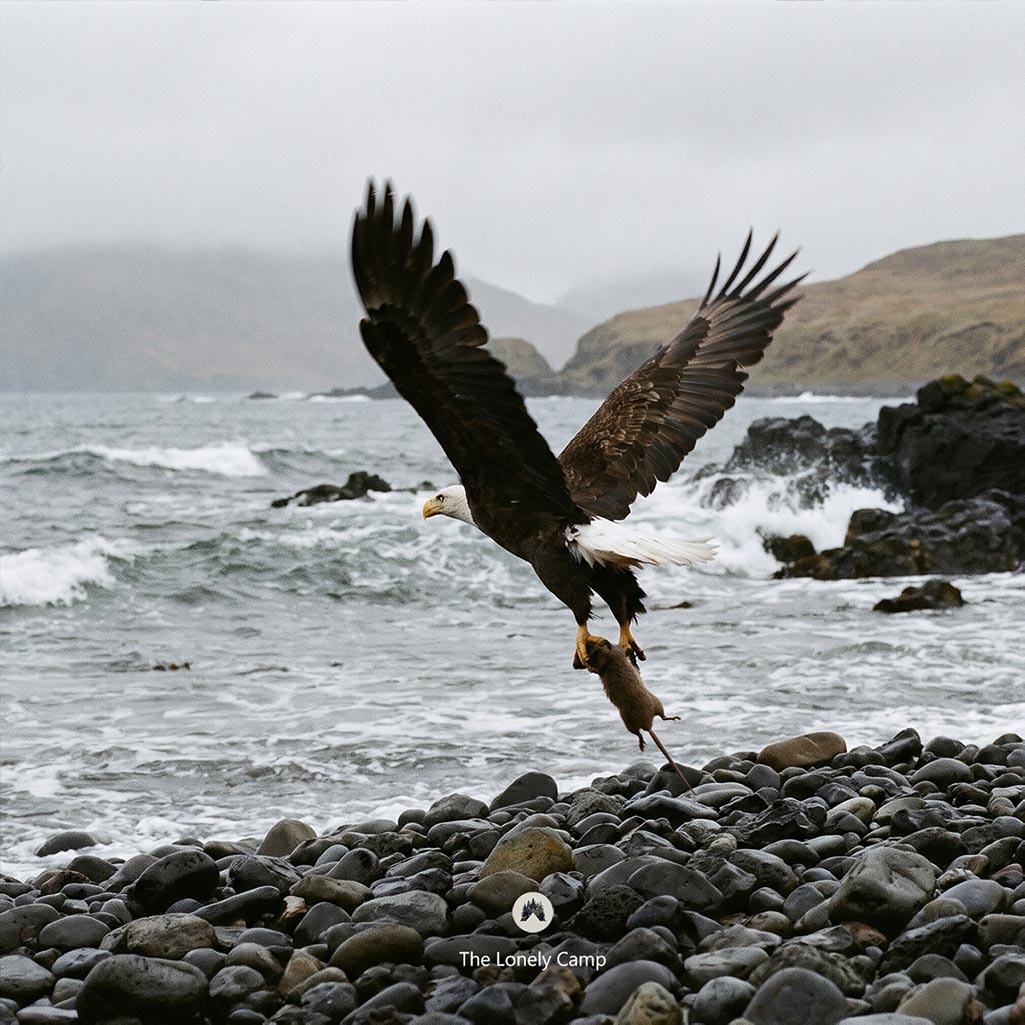
In the fall of 2008, wildlife managers dropped poison across every acre of a remote Aleutian island to wipe out an invasive army of rats. Within weeks, every rat on the island was dead. The following spring, field crews walking the shoreline started finding dead bald eagles.
Known for nearly two centuries as Rat Island, the 10-square-mile strip of treeless volcanic tundra sits in the western Aleutians inside the Alaska Maritime National Wildlife Refuge. Norway rats first swam ashore from a wrecked Japanese sailing ship in the 1780s. By the time a Russian navigator visited in 1827 and named the island after its rodents, the ground-nesting and burrow-nesting seabirds that once crowded its cliffs had been largely wiped out. The rats raided every nest they could reach, eating eggs and chicks until an island that should have been deafening with seabird colonies fell almost completely silent.
While studying the island for her doctoral research, ecologist Carolyn Kurle discovered that the rats had even reshaped the ocean shoreline without ever setting foot in the water. On healthy Aleutian islands, gulls and shorebirds patrol the rocky tide pools, eating marine snails, limpets, and other small algae-grazers. Once the rats wiped out the shorebirds, the snails and limpets multiplied unchecked and chewed down the thick beds of intertidal kelp that sheltered crabs, fish, and marine life along the coast.
In 2008, the U.S. Fish and Wildlife Service, Island Conservation, and The Nature Conservancy teamed up on a $3 million eradication campaign to take the island back. Between September 29 and October 5, helicopters flew a tight grid over the entire island, dropping grain pellets laced with a rodenticide called brodifacoum.
Brodifacoum is a slow-acting anticoagulant that stops the liver from recycling vitamin K, preventing blood from clotting until the animal dies of internal bleeding several days later. That multi-day delay is essential for rat eradication: if a poison kills right away, surviving rats associate the bait with their dead neighbors and stop eating it. The catch is that the chemical lingers inside liver tissue for months, meaning any predator or scavenger that eats a poisoned rat swallows a dose of the toxin too.
Project planners thought the risk to birds of prey was manageable. During non-toxic bait trials on the island in 2006, 88 percent of the rats retreated underground to die inside their burrows, well out of reach of scavengers. Based on those numbers, the official environmental assessment predicted that while a few bald eagles might be exposed to the poison, none were likely to die.
When biologists returned to check the island in the spring and fall of 2009, they found only about a dozen rat carcasses lying out in the open. Instead, the beaches were littered with dead birds.
Across the 2009 surveys, crews picked up more than 420 bird carcasses spanning 26 species, including 320 glaucous-winged gulls and 46 bald eagles. Only four breeding pairs of eagles had nested on the island the year before, meaning dozens of mostly juvenile eagles had flown in from neighboring islands to scavenge. When pathologists at the National Wildlife Health Center in Madison, Wisconsin, opened up the carcasses, they found severe internal bleeding in nearly every gull and eagle, and every single eagle tested positive for brodifacoum.
What the planners had not counted on was the gulls eating the grain bait directly off the tundra. Once the gulls started dying out in the open, bald eagles flocked in to feed on both the poisoned gulls and the few exposed rats, stacking up lethal doses of the blood thinner in their own livers. A Fish and Wildlife Service spokesman admitted that while the agency had braced for a few accidental losses, nobody had anticipated numbers that high.
Although bald eagles remained abundant across the Aleutians, with roughly 2,500 birds in the chain at the time, the unexpected die-off forced conservation agencies to overhaul how they monitor and time aerial poison drops on islands around the world.
On the island itself, the gamble permanently reset the clock. Not a single rat survived the 2008 drop. In 2012, with the rodents gone for good, the federal government stripped the Rat Island name off the map and restored its original Aleut name, Hawadax.
When Kurle and her team returned to survey the beaches five and eleven years after the drop, the island was loud again. Native seabirds, shorebirds, and songbirds had reclaimed the grass and cliffs, and bald eagles were nesting on the bluffs once more. With shorebirds back on the rocks eating the marine snails, the lush beds of coastal kelp had grown back over the stones, leaving the tide pools of Hawadax looking just like the islands where a shipwreck had never happened.
Image is for illustration purposes only.
Source: Salmon & Paul (2010) / U.S. Fish and Wildlife Service / National Wildlife Health Center / Kurle et al. (2021), Scientific Reports / Scientific American (2009, 2021) / Anchorage Daily News (2009, 2012).
Rat Island Poison Drop Killed Dozens of Bald Eagles