
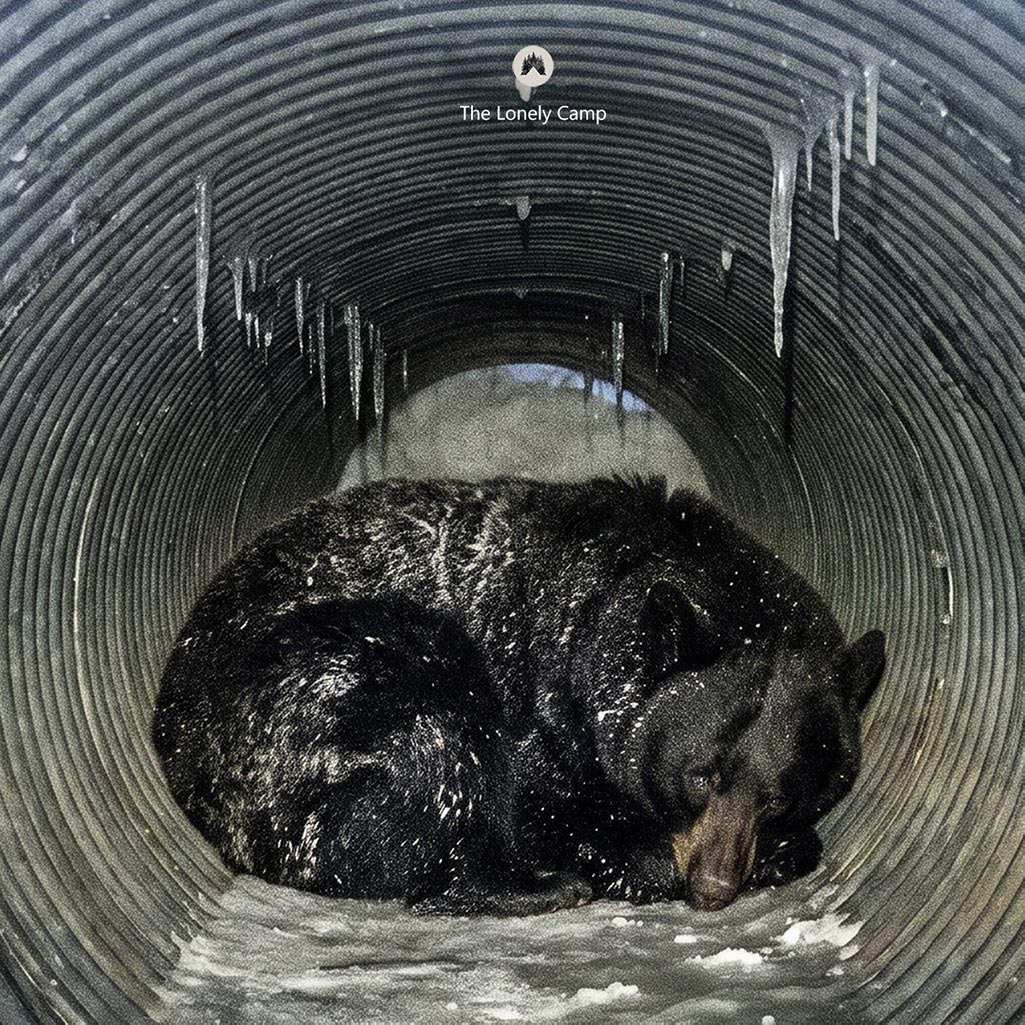
In the fall of 2022, a six-year-old male black bear weighing close to 400 pounds crawled inside a roadside drainage culvert near Wannaska in northwestern Minnesota and went to sleep for the winter. By early February 2023, the weather had sealed him inside his own den.
A brief midwinter warm spell sent snowmelt running straight down the ditch and into the corrugated metal pipe, soaking the sleeping bear and waking him up. Before he could crawl clear, the temperature plunged back below zero and the standing water froze solid around him. Pushing toward the light at the mouth of the pipe, the big male rode up onto the newly formed sheet of ice and wedged his shoulders tight against the top of the culvert.
He stayed pinned in the ice for roughly three days.
Neighbors who spotted the bear struggling at the end of the pipe called the Minnesota Department of Natural Resources. State wildlife managers initially held off on sending a crew, following standard field policy that human interference in winter almost always causes more harm to a hibernating bear than leaving it to work itself free. Once it became clear the ice had him locked in place and he could not budge, a DNR team drove out with a local county deputy to dig him out.
First, biologists used a jab pole to sedate the exhausted bear inside the pipe. Once the drugs took hold, the crew went to work with tools, chipping away the thick shelf of ice choking the culvert mouth until they could reach inside.
They looped heavy rope "paw cuffs" around the bear's front legs, lined up five people on the bank, and started pulling. It took about 20 minutes of steady hauling to slide nearly 400 pounds of dead-weight winter bear out of the tube and onto the snow.
Despite spending three days trapped in the pipe and scraping himself bloody trying to claw his way out, the bear was in remarkably good condition. He had plenty of winter fat left and showed no signs of frostbite. DNR bear project leader Andy Tri noted that the male was "no worse for wear and in real good shape."
The crew loaded the sleeping bear into the back of a pickup and drove him to Thief Lake Wildlife Management Area in neighboring Marshall County. They laid him in a makeshift nest built to give him shelter for the rest of the winter, and he was starting to come out of the sedation as they left. “He probably won’t stay,” Tri said, “but at least it will give him some protection from the elements.”
Before they let him go, Tri clipped a pair of identification tags into the bear’s ears, so anyone who saw him later would know which bear he was. No sighting of the bear has ever been reported.
Image is for illustration purposes only.
Source: KVLY-TV / Minnesota Department of Natural Resources / Grand Forks Herald (2023)