
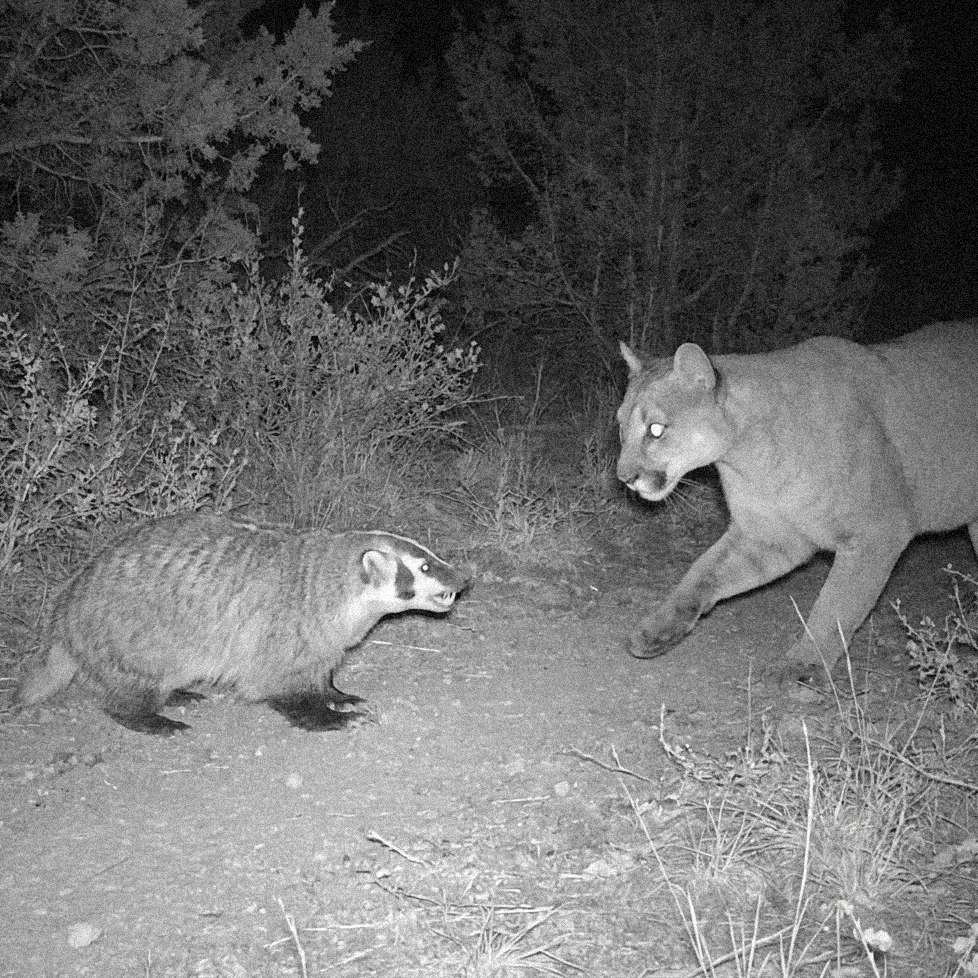
In North America, wildlife biologists understand the standard diet of a mountain lion. They are obligate carnivores that primarily rely on large ungulates, specifically mule deer and elk. When researchers track a mountain lion, they expect the kill sites to reflect this preference.
But when the Pueblo of Santa Ana Department of Natural Resources collared a specific adult male mountain lion in New Mexico, the tracking data revealed a completely different set of interactions.
The researchers designated the cat "Brokenleg." He was named for a large, visible calcification of bone on his right hind leg, indicating a severe break that had naturally healed in the wild. The injury likely altered his physical capability, potentially reducing his top running speed or his ability to reliably take down fast-moving prey.
Instead of starving, Brokenleg altered his prey selection. Over a fifteen-month tracking period, researchers located and documented sixty-eight separate kill sites attributed to this specific lion.
While he did successfully kill seventeen elk and two mule deer, his primary food source was not an ungulate. Out of the sixty-eight documented kills, twenty-four of them were American badgers. He also killed and ate nine coyotes, eight beavers, two porcupines, and a feral dog.
This data is biologically significant because an American badger is not a defenseless prey animal. Badgers are heavily muscled, aggressive predators with thick hides and long claws, fully capable of inflicting severe injuries on an attacker. A standard mountain lion avoids unnecessary risk, as a significant laceration or infection in the wild is usually fatal. Actively choosing to hunt and kill twenty-four badgers over fifteen months shows a direct behavioral adaptation.
A mountain lion hunts by ambush, relying on a rapid strike to the back of the neck to sever the spinal cord. To safely consume that many badgers, coyotes, and porcupines, Brokenleg had to repeatedly execute this ambush with enough precision to prevent the smaller predators from turning and fighting back.
The data collected from Brokenleg provides a factual record of how a predator adapts to a physical handicap. When a broken bone healed and compromised his ability to hunt standard prey, he shifted his hunting behavior to a smaller, highly aggressive food source and directly killed twenty-four competing predators within his territory to survive.
Source: https://www.facebook.com/SantaAnaDNR/ & https://www.themeateater.com/conservation/wildlife-management/you-wont-believe-this-mountain-lions-diet
Photo is for illustration purposes only