
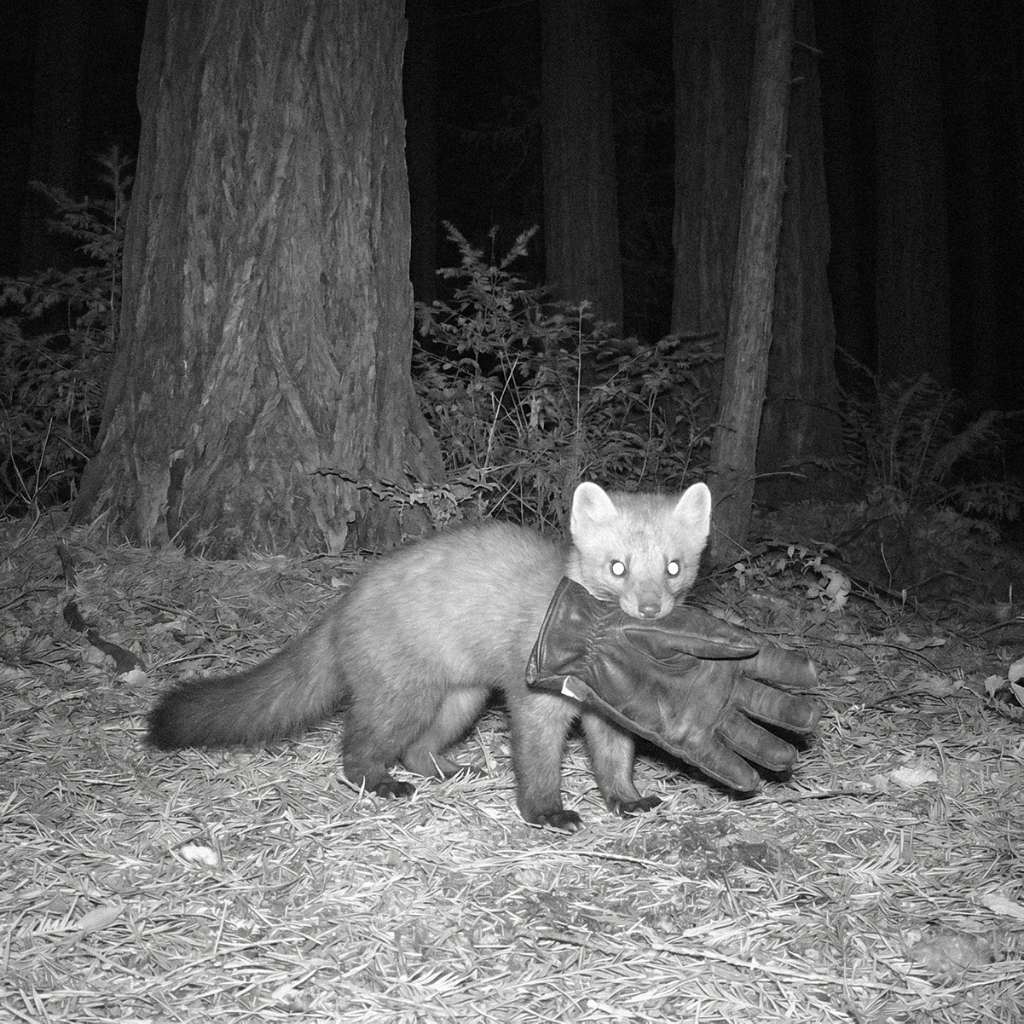
Campers in the Pacific Northwest started losing gear to something they thought had gone extinct.
In the dense, foggy canopy of the Pacific Northwest, a group of researchers and backcountry campers discovered an unlikely neighbor known as the Humboldt marten. For decades, this elusive relative of the mink and weasel was thought to be extinct in the region, until a motion-triggered camera caught a blurry image of one in the late nineties. These cat-sized carnivores are famous among biologists for their "fearless" personality, often treating human campsites as high-rise jungle gyms. Because they spend most of their lives in the trees, they approach campers from above, leaping between branches with a level of agility that makes them look like furry acrobats.
One documented account from a remote survey camp in Northern California describes a marten that became obsessed with the crew's supplies. The animal did not just steal food; it seemed genuinely curious about the mechanical nature of their gear, dragging away heavy boots and investigating the zippers on sleeping bags. Unlike many forest mammals that stick to the shadows, this marten would sit on a low-hanging limb just feet away from the campfire, watching the humans with intense, dark eyes. It showed no fear of the fire or the voices, treating the camp as a fascinating new addition to its territory.
The story of the Humboldt marten is a rare "success" tale in conservation because their rediscovery led to immediate, massive protections for the old-growth forests they inhabit. Researchers found that these mammals are so specialized that they require extremely dense shrub layers to hide from larger predators like hawks and owls. When campers venture into these specific, ancient groves, they are entering one of the last places on Earth where these animals feel safe enough to be bold. This proximity creates a strange bridge between a species that nearly vanished and the people who now work to keep their habitat intact.
The marten’s habit of "caching" or hiding items means that campers in these areas sometimes find their missing belongings weeks later, tucked into hollow logs or high tree cavities. One biologist reported finding a stash of colorful plastic flagging tape and a stray glove neatly tucked away in a redwood snag, likely kept as trophies by a curious marten. These interactions serve as a reminder that the wilderness is often much more crowded than it looks. While we see a quiet forest, the marten sees a complex playground filled with opportunities for mischief and exploration.
Detailed records of these encounters and the recovery of the species are documented by the U.S. Fish and Wildlife Service and through the long-term monitoring projects of the Oregon State University wildlife department.