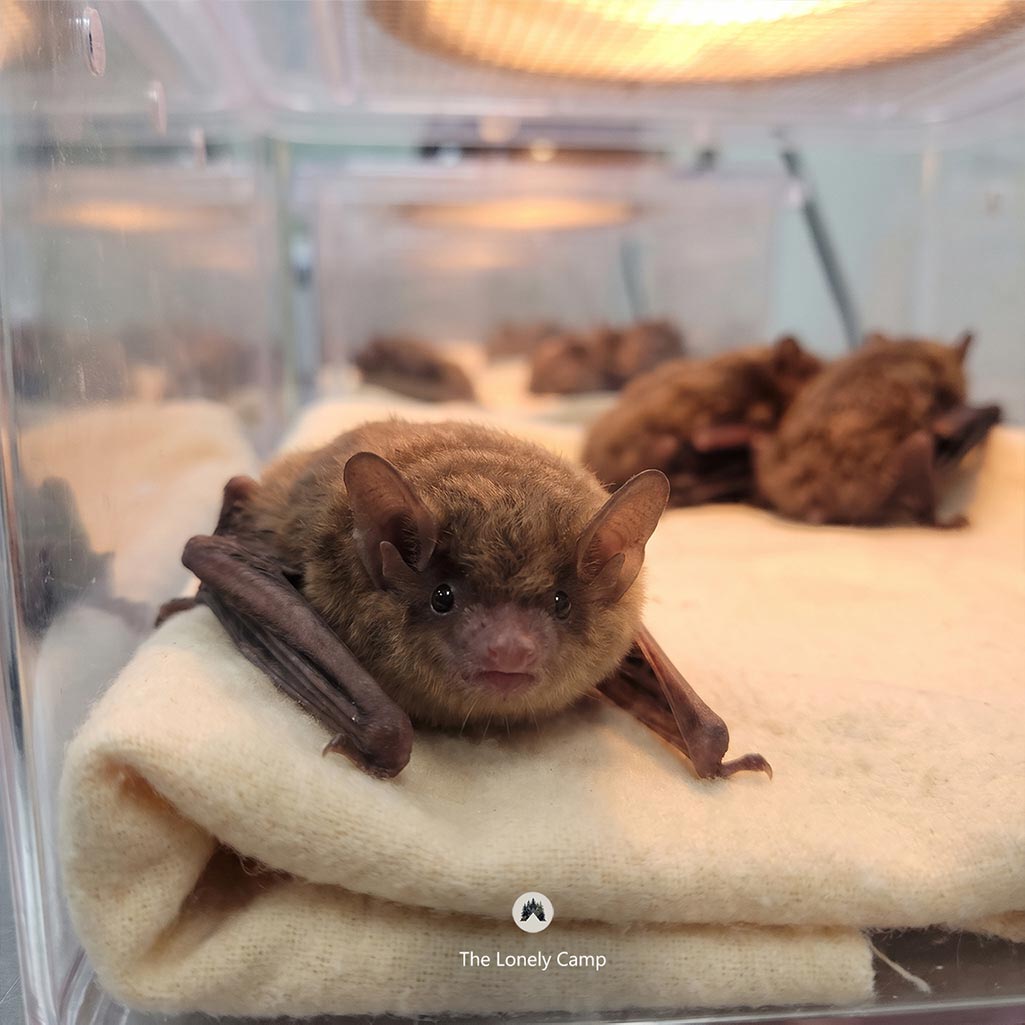
In December 2022, an Arctic blast hit Houston hard enough that bats started dropping from the underside of a bridge. More than 1,500 of them spent the cold snap in a wildlife director’s attic.
The Waugh Drive Bridge over Buffalo Bayou is home to one of Houston’s best-known colonies of Mexican free-tailed bats. They roost wedged into the narrow gaps in the concrete overhead, and on warm evenings people gather on the bank to watch them stream out at dusk. These are small animals, about half an ounce each, and they live year-round in a city that rarely freezes.
The week before Christmas, it froze. A bat this size loses body heat quickly, and when its temperature drops far enough, its metabolism slows to the point where its muscles can no longer hold on. The bats did not freeze to death on the bridge. They lost their grip and fell 15 to 30 feet onto the pavement and ground below.
Mary Warwick, wildlife director at the Houston Humane Society, was out holiday shopping when the wind made her think of the bats. She drove to the bridge and found more than 100 of them lying on the ground, motionless, looking dead. She collected them in a box and set it on the heated passenger seat of her car. During the 40-minute drive home, the box started chirping. The bats were warming up and moving.
She put them in incubators and went back to the bridge twice a day to pick up more. Two days later, she got a call that more than 900 bats had been rescued from a bridge in nearby Pearland. By the third and fourth days, other volunteers were showing up at the Waugh Bridge, and a transport effort was running bats to Warwick, who was the only bat rehabilitator in Houston.
Each bat went into an incubator until its body temperature came back up. Then it got fluids injected under the skin, because a cold-stunned bat is usually dehydrated as well. Within a few days she had around 1,600 of them, far more than she could feed and far more than the Humane Society had room for.
So they went into her attic. She sorted them into dog kennels by colony, keeping the Waugh Bridge bats and the Pearland bats apart. The cool attic was deliberate. In the cold, the bats settled into a state close to hibernation, with their metabolism turned low enough that they could live on their fat reserves without being fed. Kept warm, 1,600 insect-eating bats would have needed to eat every night, and there was no way to feed that many by hand.
“As soon as I wake up in the morning I wonder: ‘How are they doing, I need to go see them,’” Warwick said.
About 115 of the bats died, some from the cold and some from the fall itself. The rest recovered over six days. On December 28, as temperatures climbed, nearly 700 were released back at the Waugh Bridge and about 850 at the bridge in Pearland. Fifty-six went to a bat sanctuary for longer care, and 20 stayed with Warwick a little longer.
Afterward, the Humane Society began raising money for a dedicated bat room, and Warwick said the entire animal rehabilitation team would be vaccinated against rabies and trained to care for bats. Texas had already seen this happen once. During the statewide freeze of February 2021, hundreds of bats were found dead at roosts across the state.
Image is for illustration purposes only.
Source: Associated Press via NPR (2022) / KHOU (2022) / Houston Humane Society / Austin American-Statesman (2021)
Houston Volunteers Rescue More Than 1,500 Cold-Stunned Bats