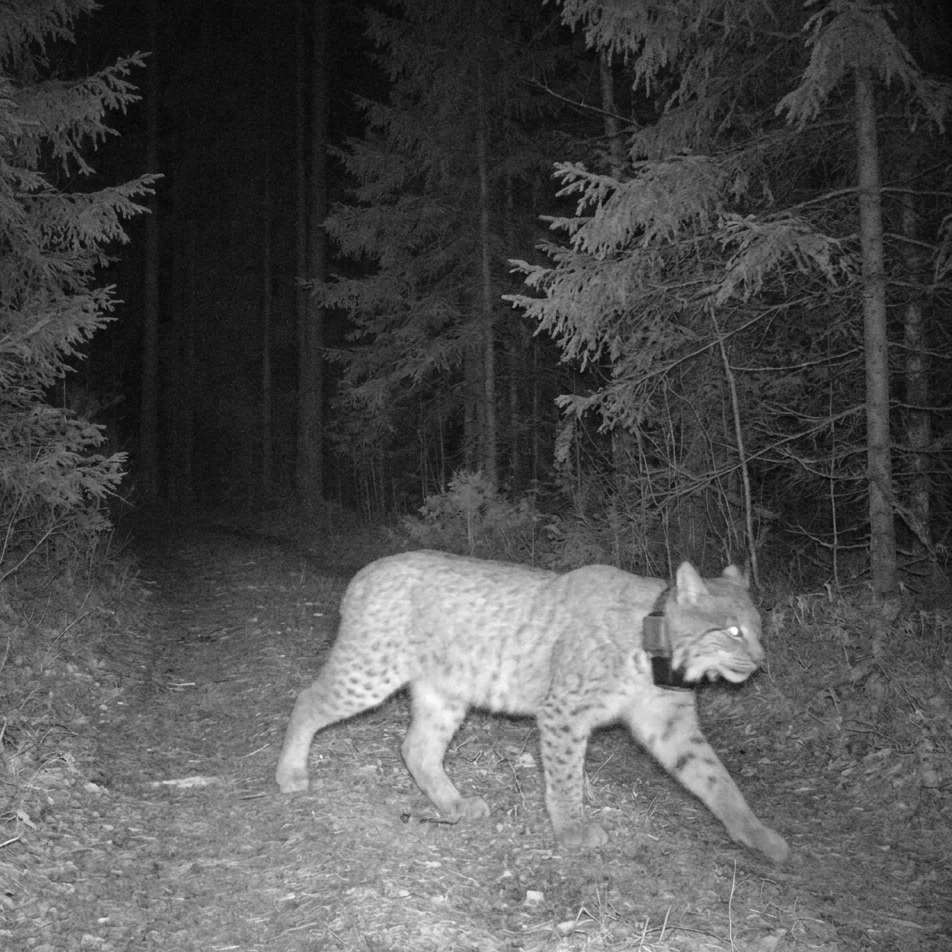
In 1999, Colorado decided they needed to re-establish a breeding population of Canada lynx in the Southern Rockies. To do that, they spent thousands of dollars per animal, paying trappers in Alaska and Canada to capture wild cats. Biologists crated them up, hauled them thousands of miles south, fitted them with heavy telemetry collars, and turned them loose into the high-elevation spruce and fir forests of the San Juan Mountains.
The basic hope was that the cats would settle into the deep snow, start hunting snowshoe hares, and breed. For the most part, the biology held up, and the project was a success.
In April of 2003, biologists opened a crate near the Rio Grande Reservoir and released a two-year-old male lynx known officially as BC-03. He had originally been captured in the thick timber of Kamloops, British Columbia. For a few years, he followed the script perfectly. He established a high-alpine home range, figured out how to make a living in the Colorado dirt, and successfully sired a litter of kittens, adding his northern genetics to the struggling local population.
But eventually, something in his environment shifted. It might have been a localized crash in the snowshoe hare population, pressure from heavier resident males, or just a hardwired instinct pushing him to find new timber. Whatever the biological trigger was, BC-03 abandoned his established territory. He turned his nose north and started walking.
When you look at the anatomical build of a Canada lynx, you are looking at a predator built exclusively for a very specific environment. A mature male tops out around twenty-five pounds. They are constructed with disproportionately massive, heavily furred paws that act as natural snowshoes, allowing them to float on top of deep winter powder. Their hind legs are noticeably longer than their front legs, giving them a coiled, sloped posture designed for explosive, vertical leaps to catch a running hare in the brush.
They are built for short bursts of extreme violence in dense cover. They are absolutely not built for long-distance marathon travel across open, exposed ground.
To walk out of the San Juan Mountains and head north, BC-03 had to cross massive expanses of low-elevation sagebrush and fragmented agricultural valleys. Every time he stepped out of the heavy timber, he was exposed. A twenty-five-pound solitary cat caught in the open is a prime target for a pack of coyotes or a golden eagle. On top of the natural predators, he had to navigate high-speed interstates and swim across freezing river systems.
He survived the crossing strictly by remaining invisible. Relying on sheer physiological grit, he stayed in the shadows, hunted in the dark, and kept pushing north. The tracking data eventually confirmed a staggering overland route. He walked up through the spine of Colorado, crossed the high desert of Wyoming, threaded his way through Montana, and finally crossed the international border, stepping back onto Canadian soil.
He didn't stop at the border. He pushed deep into Alberta. By the time his collar stopped moving, he had walked over twelve hundred miles. It stands as one of the longest documented dispersals of any feline in North American history.
But out in the timber, a massive physical achievement does not guarantee a quiet retirement. The natural world operates on a brutally unsentimental economy. In January of 2010, the nine-year-old cat was quietly navigating a stretch of woods near the town of Nordegg, Alberta, when he stepped onto a legally set commercial trap line. The long walk ended right there in the snow.
He sired kittens in a foreign state, pulled off a record-breaking, continent-spanning migration, and ultimately died just a few mountain ranges away from where he was originally born. It is a stark reminder of the uncompromising reality of feline navigation. We can invest massive amounts of money to put an animal exactly where we want it, but any cat, whether it is a twenty-five-pound apex predator or a ten-pound house cat, is eventually going to follow its own internal compass, no matter how many miles of asphalt and dirt stand in the way.