
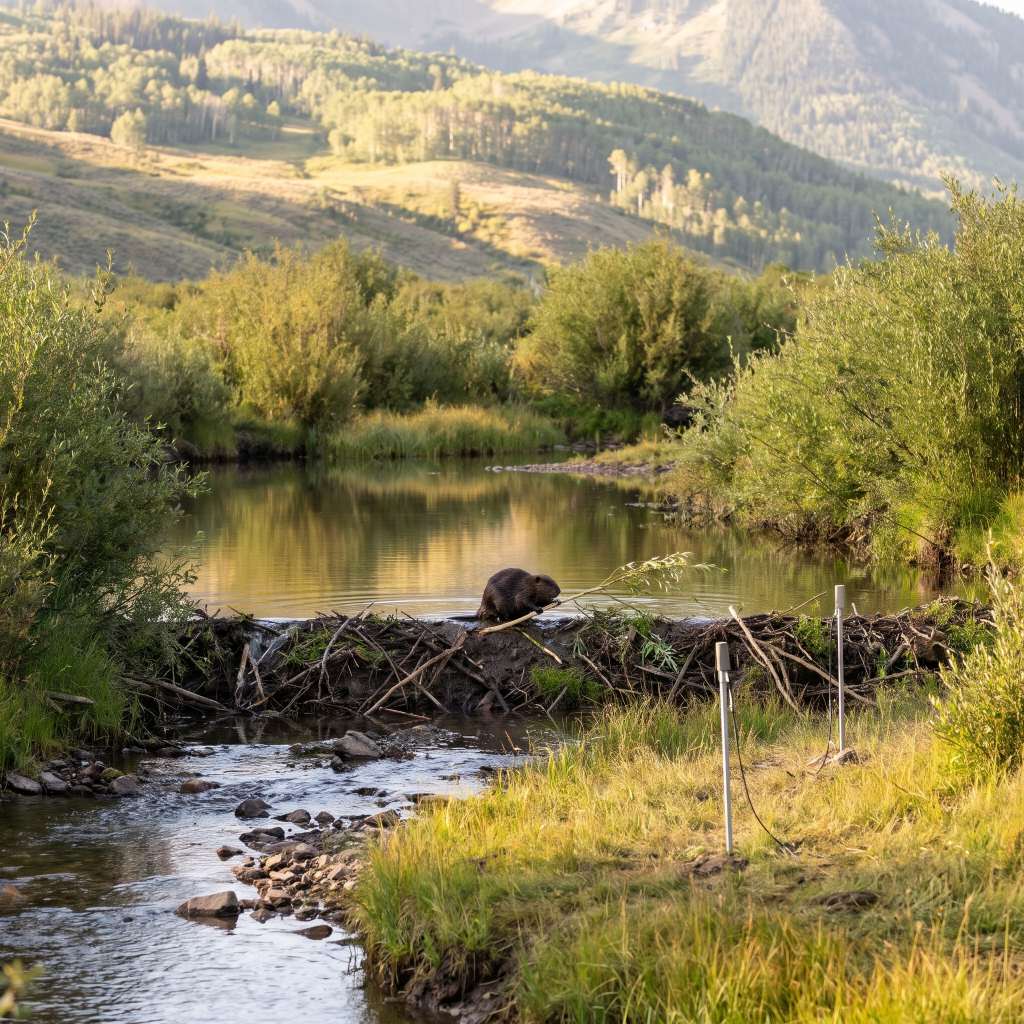
In 2018, Stanford scientists were tracking how drought and floods change the water in a Colorado mountain river. In the middle of their study, a beaver moved in and built a dam right across their research site.
The river was the East River near Crested Butte, a main tributary of the Colorado River. A Stanford PhD student, Christian Dewey, had started working there in 2017 in the lab of Earth scientist Scott Fendorf, alongside researchers from Lawrence Berkeley National Laboratory. They had sensors buried in the river and along its banks, recording water levels every hour. Their question was simple: in a dry year or a wet year, how well does the land along a river clean the water before it flows downstream?
2018 turned out to be a historic drought year across the American West. Then, in late July, a beaver began building a dam across the main channel, right in the stretch the team was watching. It kept working on the dam until October 5, when the dam was destroyed. It stood for about ten weeks, and the sensors recorded all of it.
Upstream of the dam, the water rose steeply. Downstream, it didn't. The difference forced river water sideways into the riverbank. The push was 10 to 13 times stronger than anything the drought had caused, and stronger than the high water the team measured in 2019.
That push is what cleans the water. River water carries nitrogen, the same nutrient in farm fertilizer, and too much of it feeds algae that choke rivers and lakes. When the water soaks into the bank, bacteria living in the soil feed on that nitrogen and turn it into nitrogen gas, which escapes harmlessly into the air. The water seeps back into the river cleaner.
The beaver turned its stretch of riverbank into a giant sponge full of bacteria. While the dam stood, it raised the amount of nitrogen cleaned out of the water by about 44 percent.
The timing made the result even more striking. Hot, dry years are expected to make mountain rivers dirtier. But the same warmer, drier West is helping beavers spread back into it. Fendorf called the beavers' effect "a positive counter to climate change," and said the area around the study site now shows beaver activity that wasn't there 50 years ago.
The cleaner water doesn't stay in the mountains. The East River feeds the Colorado River, which 35 to 40 million people rely on for some or all of their water.
The dams also keep the land around them soaked. In a separate study of western wildfires, beaver-dammed stretches of stream stayed green while the land around them burned.
North America once held an estimated 60 to 400 million beavers. Trapping for fur, mostly to make felt hats, cut them down to a fraction of that, and today's estimates run from about 6 to 12 million. Beavers are now returning to the East River watershed. Using 2019 aerial images, the Stanford team counted 18 beaver dams across 33 square miles of it, and said the real number was probably higher.
Image is for illustration purposes only
Source: Dewey, C., et al. (2022), Beaver Dams Overshadow Climate Extremes in Controlling Riparian Hydrology and Water Quality, Nature Communications 13 / Stanford University / Lawrence Berkeley National Laboratory / U.S. Bureau of Reclamation / Fairfax and Whittle (2020), Ecological Applications / Colorado Parks and Wildlife