
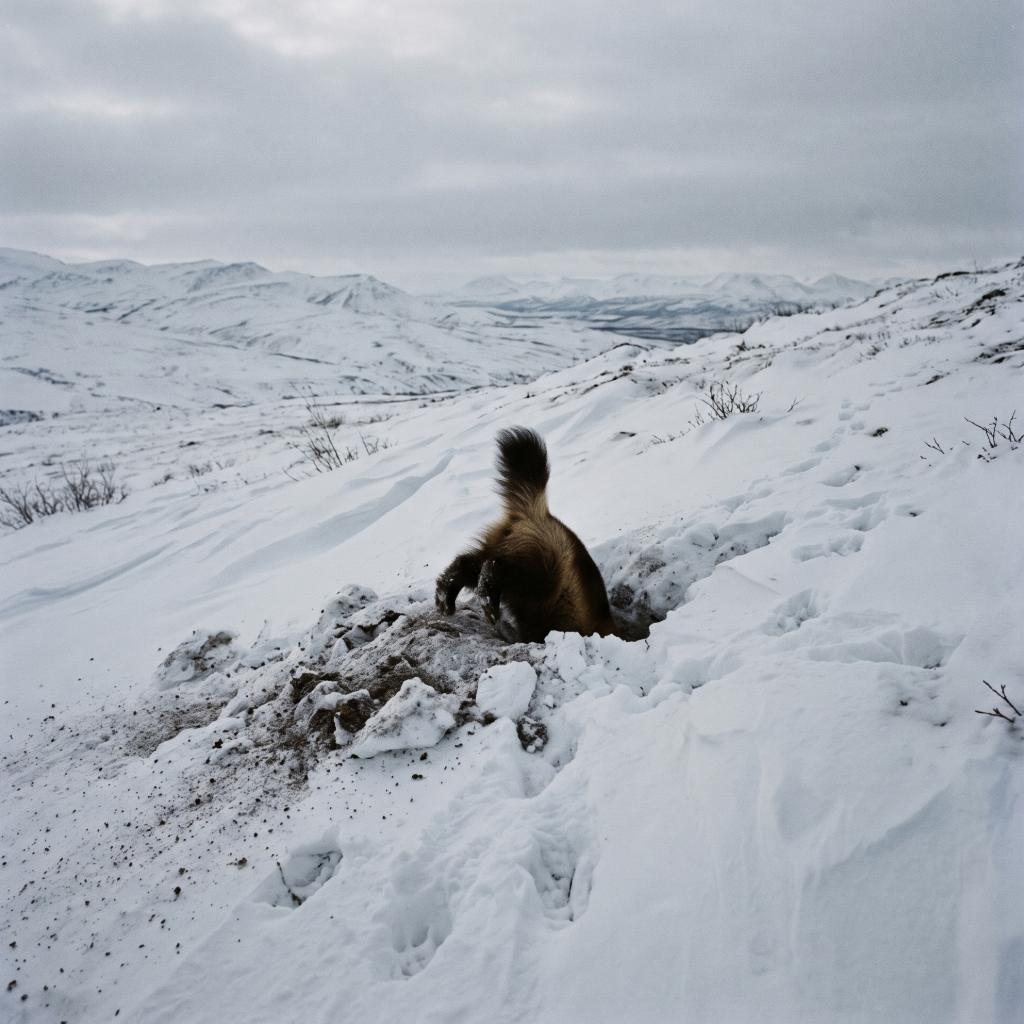
In Arctic Alaska, wildlife biologist Audrey Magoun once came across an adult male wolverine with nothing but its rear end sticking out of the snow. As she approached, the wolverine bolted from the hole and ran off.
When Magoun looked down inside, she found a ground squirrel frozen solid into the soil. Half of the squirrel was still anchored there, shredded and thawed at the edges where the wolverine had been gnawing on it.
Looking closer, she noticed the frozen sides of the hole had been gnawed too. That single field observation offered a clean explanation for something she kept finding in her winter scat samples: soil mixed directly with squirrel remains. When a meal is locked inside frozen ground, a wolverine does not bother separating meat from dirt. With heavy jaws built to shear through frozen bone, it simply chews through both.
Wolverines rely heavily on food caching to get through Arctic winters. During the warmer months, they stash surplus prey in cold earth, rock crevices, and snowbanks, turning the tundra into a scattered freezer. Months later, when live prey is scarce, they follow their noses back to those buried caches and dig them out one by one.
Magoun's tracking notes showed just how relentless that foraging is. Along roughly 50 miles of winter tracks in Arctic Alaska, she documented 186 separate diggings. Inspecting those holes turned up a full record of what a wolverine relies on during the lean months: squirrel hair, caribou bone fragments, ptarmigan feathers, and even eggshells.
Most predators have to chase down fresh calories to survive the northern winter. A wolverine is built to dig up last summer's leftovers and eat the frozen dirt along with them.
Image is for illustration purposes only
Source: Magoun, A.J. (1987). "Summer and Winter Diets of Wolverines, Gulo gulo, in Arctic Alaska," Canadian Field-Naturalist, 101: 392-397.