
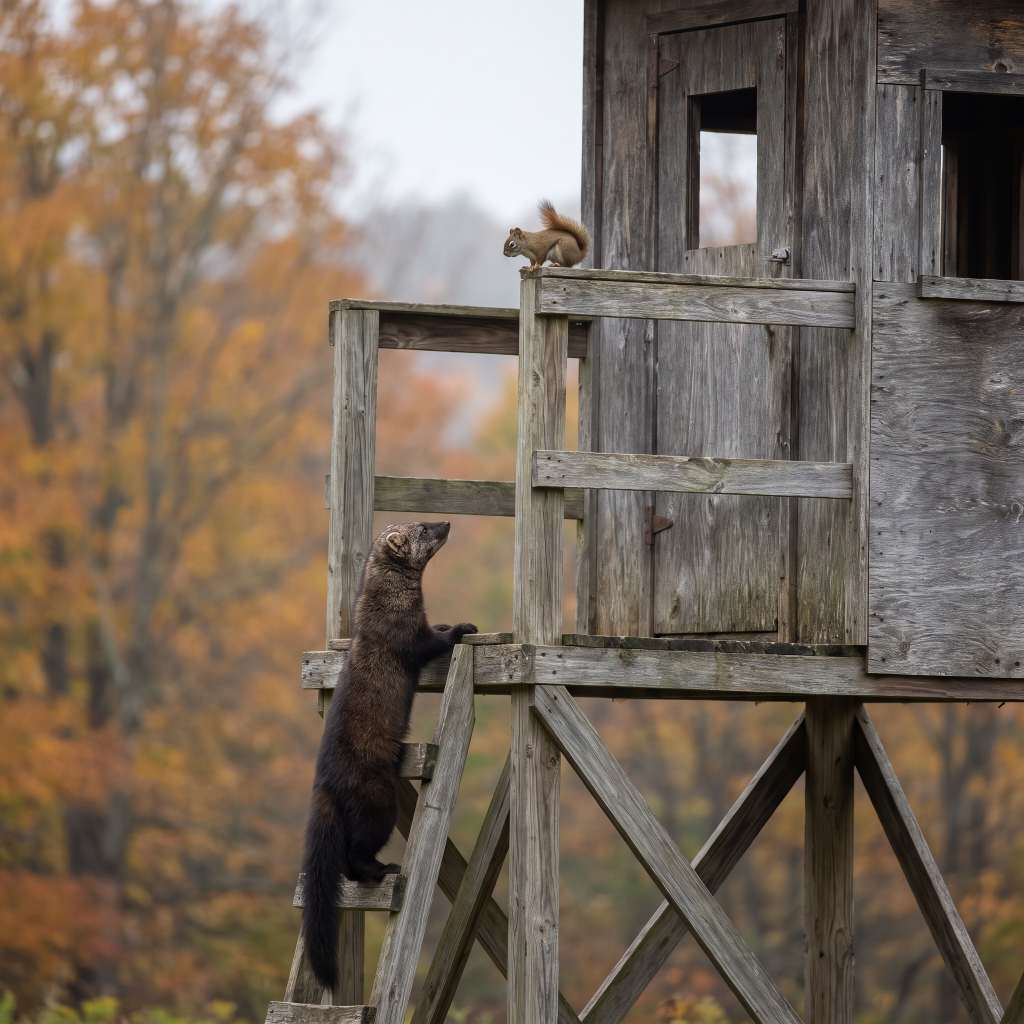
In 2021, West Virginia University researchers set out to check whether the state's fisher population had suffered from a genetic bottleneck. For more than fifty years, biologists had treated every fisher in the central Appalachians as a descendant of 23 animals imported from New Hampshire in 1969. When the lab results came back from samples gathered across West Virginia, Pennsylvania, New York, and New Hampshire, the DNA told a different story.
The West Virginia fishers carried genetic markers that did not match the New Hampshire source stock. A small pocket of native fishers had survived the industrial clear-cutting of the early 1900s, holding out in the remotest timber of the Monongahela National Forest while wildlife managers and trappers assumed the species had been gone since around 1912. As WVU researcher Amy Morris put it, the state had never actually wiped them out.
Nobody suspected they were still there in 1969, when West Virginia and New Hampshire arranged a straight swap to fix two different wildlife losses. Both states had seen native animals disappear under unregulated harvest and heavy logging. West Virginia had plenty of wild turkeys and no fishers, while New Hampshire had the opposite problem, so the states traded turkeys for 23 fishers.
New Hampshire's half of the deal became one of the Northeast's biggest wildlife turnarounds. The transplanted turkeys rebounded so thoroughly that seeing them in fields or crossing rural roads is now ordinary, and the state runs both spring and fall hunting seasons.
Back in West Virginia, biologists released their 23 fishers into two regenerating hardwood and spruce-fir sites inside the Monongahela National Forest. Eight animals went to Cranberry Glades in Pocahontas County, where local residents showed little concern. The other 15 were turned loose on Canaan Mountain in Tucker County, setting off a wave of local rumors and anger. Rich Rogers, the Division of Natural Resources furbearer project leader, noted that some residents treated the unfamiliar animals like demons that might sneak into bedrooms and take babies.
The two release groups also fared very differently in the woods. The eight fishers at Cranberry Glades never spread far beyond a limited pocket of Pocahontas County, though biologists have never settled whether that came down to local habitat or simply starting with a smaller group.
On Canaan Mountain, the 15 fishers multiplied fast. Within six years, the population was strong enough for the state to open a limited trapping season of one fisher per trapper each year. Trappers took animals right away, yet the numbers kept climbing. Rogers explained that fishers are much harder to trap than otters, meaning a tight harvest in dense forest only skims the surplus.
Before long, the Canaan Mountain population pushed past West Virginia's borders into the Appalachian counties of Maryland and into Virginia. Fishers moved northwest into southwestern Pennsylvania as well, where the Pennsylvania Game Commission still credits the 1969 West Virginia release as the source of its western population.
For five decades, that four-state comeback was credited entirely to 23 New Hampshire transplants. The 2021 genetic study showed the trade had not built a population out of thin air. Instead, those imported fishers bred into a native remnant that had stayed hidden in the Monongahela timber all along, and the mix of both groups is what repopulated the central Appalachians.
Source: West Virginia Division of Natural Resources / Pennsylvania Game Commission / West Virginia University, 2021 / Wonderful West Virginia Magazine, November 2025