
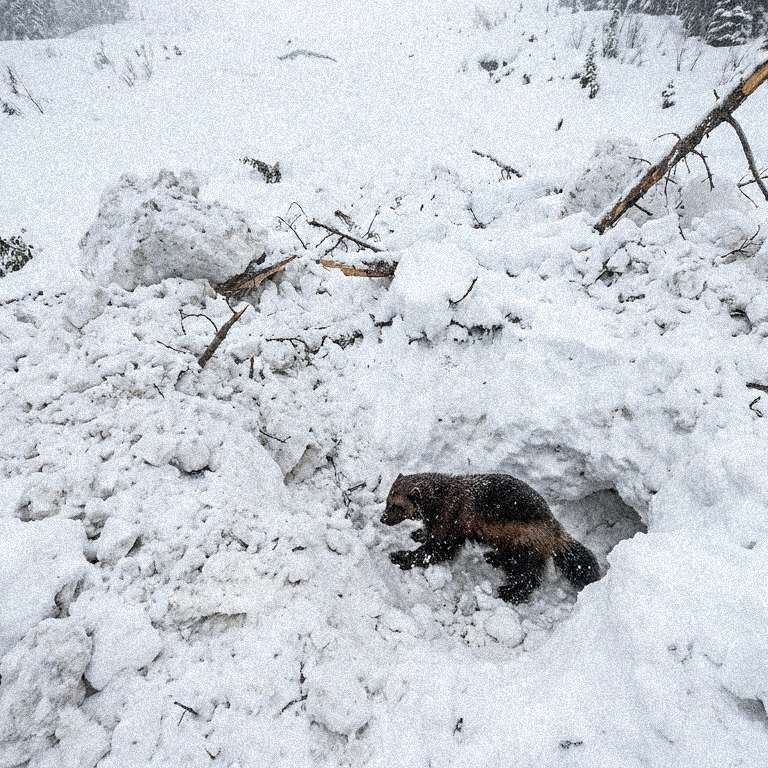
When you look at the high alpine basins of the Northern Rockies in the dead of winter, it looks like a completely sterile environment. The temperature drops well below zero, the wind scours the ridges, and the avalanche chutes fill with massive amounts of snow. For most animals, it is a landscape you either leave or die in. But for a wolverine, that harsh, frozen terrain is an absolute buffet.
A wolverine thrives in the deepest part of the winter. They have massive paws that spread out like snowshoes, allowing them to float over deep powder without sinking. They have incredibly powerful jaws designed to shear through frozen meat and crack heavy bone. Most importantly, they possess a sense of smell that is almost impossible to comprehend. They can detect a dead carcass buried under multiple feet of packed, frozen snow.
A few years ago, researchers running a winter tracking study in Glacier National Park documented exactly how a wolverine makes a living in this kind of country.
A mature mountain goat had been caught in a massive slide in a steep chute. The goat was swept down the mountain and buried under several feet of dense, concrete-hard avalanche debris. The freezing temperatures locked the carcass in the ice. To a wolf or a coyote, that meat was completely inaccessible.
But a solitary male wolverine passing through the drainage picked up the scent from the surface of the snowpack.
The wolverine did not just dig a shallow hole. He excavated a deep, vertical tunnel straight down through the packed ice until he reached the frozen goat. Once he hit the carcass, he did not try to drag it out to the surface. He simply hollowed out a small cave at the bottom of the avalanche debris.
He stayed down in that dark hole for days. He used his heavy teeth to tear the frozen meat and crush the thick bones, extracting the dense, high-calorie marrow that other scavengers simply cannot reach. When he finally finished the goat, he climbed out of his ice tunnel and disappeared back over the ridge to find the next one.
Source: Glacier National Park Wolverine Project / The Wolverine Foundation