
On December 2, 2016, marine mammal researchers working in the cold waters of Johnstone Strait off the northeastern coast of Vancouver Island heard an intense series of high-pitched vocalizations over their underwater hydrophone. When the research boat caught up to the whales, a 32-year-old male Bigg’s killer whale known as T068A swam right past the vessel with a newborn calf from an unrelated family group clamped in his jaws by the tail flukes.
Published in Scientific Reports in 2018 by Jared Towers and a team of researchers from Fisheries and Oceans Canada, the encounter became the first documented case of infanticide ever recorded in killer whales.
Hours earlier, another observer had photographed the newborn swimming alive alongside its 13-year-old mother, T046B1, and her extended family near Port McNeill. By the time the scientists arrived on the scene, T068A and his 46-year-old mother, the matriarch T068, had separated the calf from its family. Keepers of the regional photo-identification catalog had recorded more than 5,300 encounters with this mammal-eating killer whale population over four decades without ever witnessing a lethal fight between its members.
The calf's mother refused to let her newborn go without a fight. Chasing the much larger male through the strait, T046B1 dove beneath T068A and slammed upward into his underside with enough force to throw blood and water into the air and send a jolt through the hull of the nearby research boat. Fresh tooth rake marks left by the mother's jaws cut across the adult male's back and dorsal fin.
Rather than retreating, the male's 46-year-old mother fought right alongside her son. As the grieving mother repeatedly charged in to recover her calf, T068 maneuvered her massive body directly between T046B1 and T068A to block the attacks and shield her adult offspring.
Underwater video lowered from the research boat later showed the older matriarch had taken possession of the dead newborn herself, swimming through the dark water with the calf held in her mouth while keeping it away from its pursuing family. The struggle stretched across more than four hours and covered several miles before the calf’s exhausted family finally broke off the chase.
Because Bigg’s killer whales hunt marine mammals like seals, sea lions, and porpoises, the researchers watched closely to see if the pair had killed the newborn for food. Neither T068A nor his mother ever fed on the carcass. Instead, they carried the intact body around the strait simply to ensure it stayed dead and out of its mother's reach.
That detail pointed the biologists toward a dark evolutionary motive seen in lions, bears, and dolphins, though never before confirmed in killer whales. When a nursing female loses her newborn calf, she stops lactating and quickly returns to breeding condition. By killing the infant of an unrelated female, T068A may have been forcing T046B1 back into estrus to create a mating opportunity for himself.
Because male killer whales stay with their mothers for life, the older matriarch had just as much stake in the outcome. At 46 years old, T068 was past her own reproductive years, meaning the only way to pass her genes into the next generation was to help her mature son father calves with outside females, even if it meant helping him drown another mother's newborn. While the reproductive motive remains a scientific hypothesis, the four-hour battle in Johnstone Strait proved that the bond between a killer whale mother and her adult son extends all the way to lethal violence.
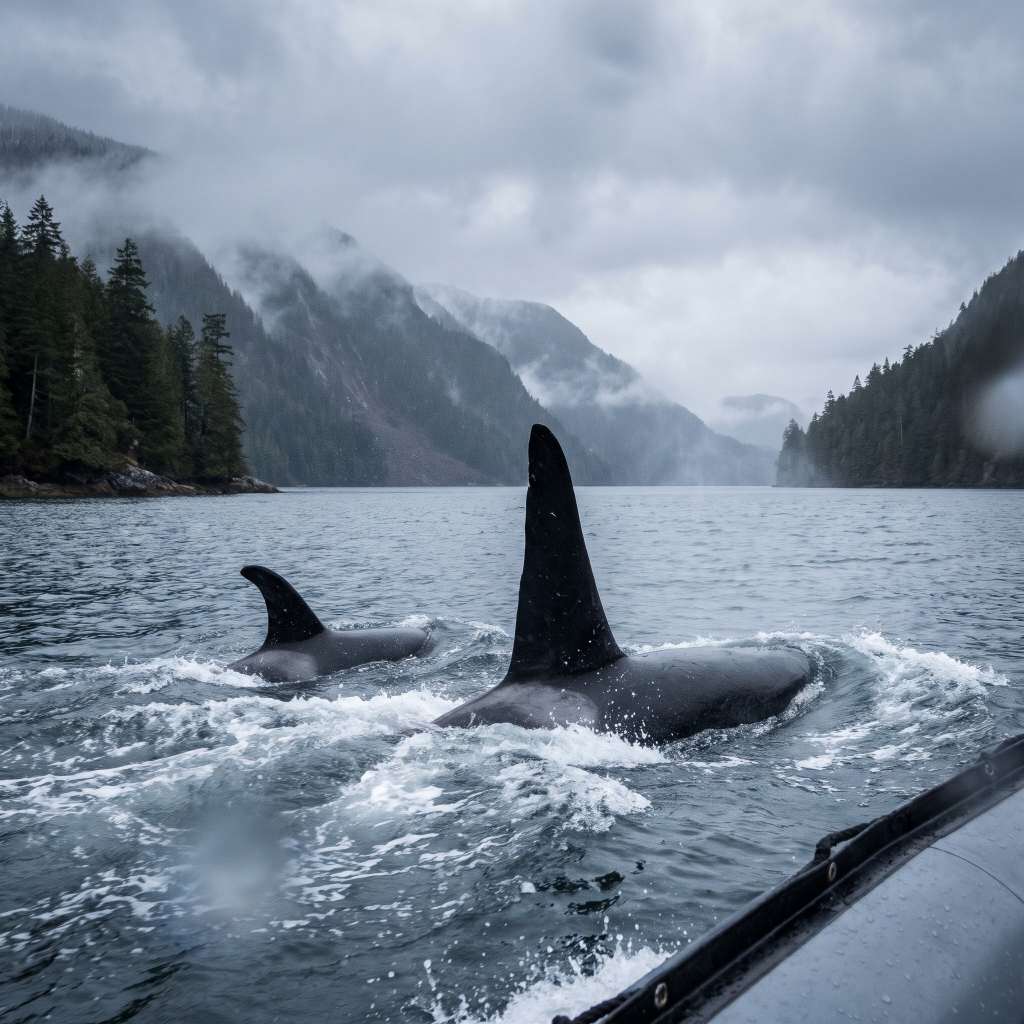
Image is for illustration purposes only.
Source: Towers et al. (2018), Scientific Reports 8: 4366 / Fisheries and Oceans Canada / Bay Cetology.