In the summer of 2011, a dead harbor porpoise washed up on the beach at Fort Funston in San Francisco. She was a lactating female, and researchers from Monterey Bay had identified her alive twice before. When biologists opened her up, she had two broken jawbones, fractured ribs on both sides, and a broken shoulder blade.
Biologists suspected coastal bottlenose dolphins had beaten her to death.
Harbor porpoises are small, quiet animals that grow to about five feet long and stick to cold water down the coast to Point Conception. Coastal bottlenose dolphins are twice as long, weigh several hundred pounds, and used to stay down in Southern California. Nobody had ever recorded them north of Point Conception until the big El Niño of 1982 and 1983 warmed up the water.
The dolphins followed the warm water north and never left. By the late 2000s, they were living in Monterey Bay and showing up in San Francisco Bay. Right around the same time, harbor porpoises moved back into San Francisco Bay in real numbers after being scarce there for almost a century. That put both animals in the same stretch of water.
Biologists confirmed the first fatal attack in California in 2005. By 2007, enough dead porpoises were washing up along the central coast that the National Marine Fisheries Service declared an unusual mortality event. Everyone expected to find a virus or a parasite. Instead, the necropsies turned up broken bones and internal bleeding from blunt trauma.
Between 2005 and 2011, researchers Mark Cotter, Daniela Maldini, and Thomas Jefferson documented 44 harbor porpoises killed by bottlenose dolphins in California, publishing their findings in *Marine Mammal Science* under the title "Porpicide in California." Between 2007 and 2009, the team watched three attacks happen right in front of them in Monterey Bay, and after one of them, they scooped up the dead porpoise as soon as the dolphins swam off.
Every attack they saw worked the same way. Two or three dolphins broke off from a larger pod and ran down a single porpoise. They rammed it with their bodies, knocked it clean out of the water, and used their beaks to push its tail up so its head stayed underwater until it drowned. Biologist Alvaro Jaramillo watched another attack from the beach near Half Moon Bay. He said the dolphins sandwiched the porpoise between them, tossed it into the air, and kept on it until it could not get away.
This was not some strange California fluke. Biologists have been documenting bottlenose dolphins killing porpoises and smaller dolphins in the Atlantic and off Europe since the early 1990s. It was not about food, either. The two animals eat different fish and hunt in different ways. Bottlenose dolphins in California share the water with seals and sea lions, which eat the exact same fish the dolphins do, and the dolphins leave them alone.
What lined up across the attacks was sex and age. Out of the dolphins identified at the kills, 92 percent were confirmed or suspected males, and most of them were young. The attacks also peaked in the summer and fall, right during the dolphins' breeding season.
Researchers have two main guesses for why they do it. In some populations, male bottlenose dolphins kill calves of their own species so the mothers will come back into heat. Since an adult harbor porpoise is about the same size as a dolphin calf, one idea is that the young males are practicing on porpoises.
Cotter leaned toward a simpler explanation: young males coming into sexual maturity are too low on the social ladder to get near females, so they take their frustration out on a smaller animal that cannot fight back. Nobody has proven either theory yet.
What the study did make clear is that 44 dead porpoises is just a floor. Those were only the bodies that washed up where people could find them. Cotter estimated that another 15 to 20 dead porpoises across just two summers were probably killed the same way, and plenty more likely sank offshore without anyone ever seeing them.
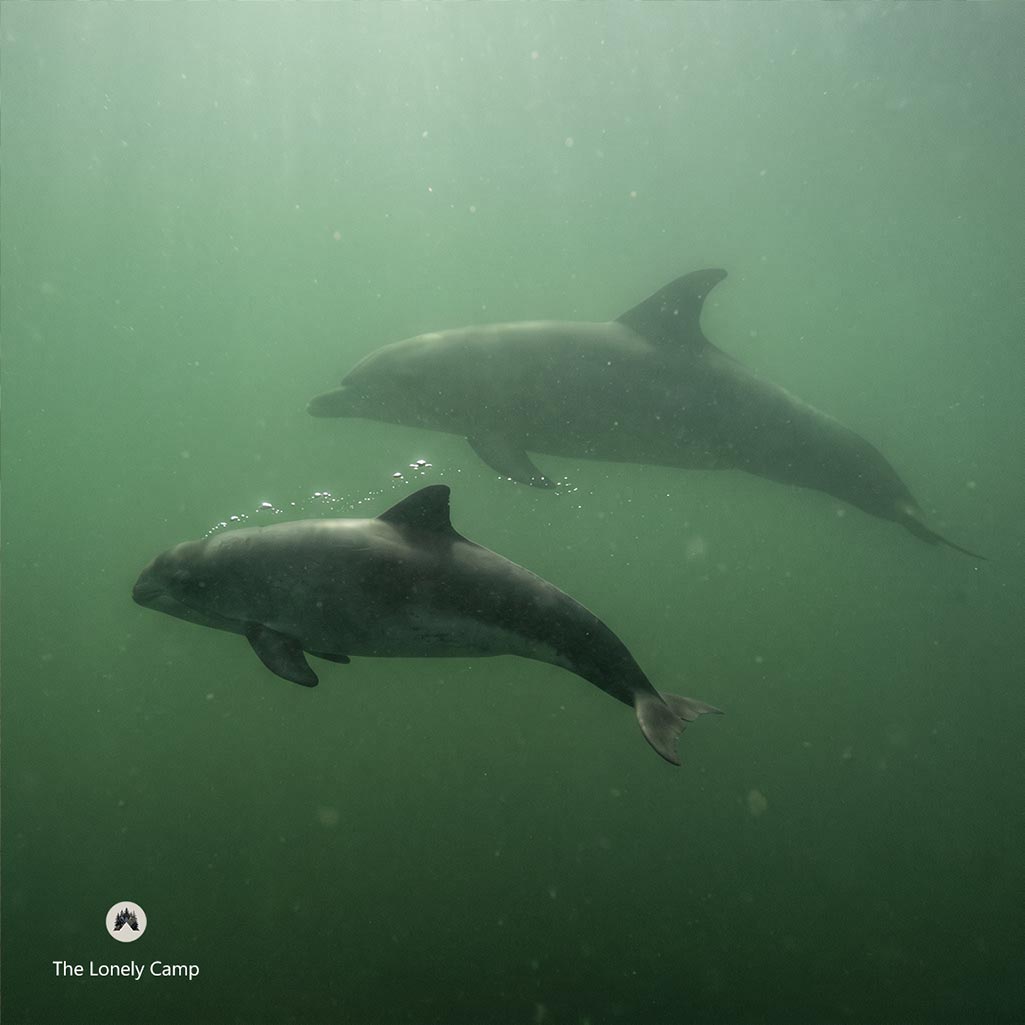
Image is for illustration purposes only
Source: Cotter, Maldini & Jefferson (2012), Marine Mammal Science / Wilkin et al. (2012), Aquatic Mammals / San Francisco Chronicle (2011)
Bottlenose Dolphins Killed at Least 44 Harbor Porpoises in California