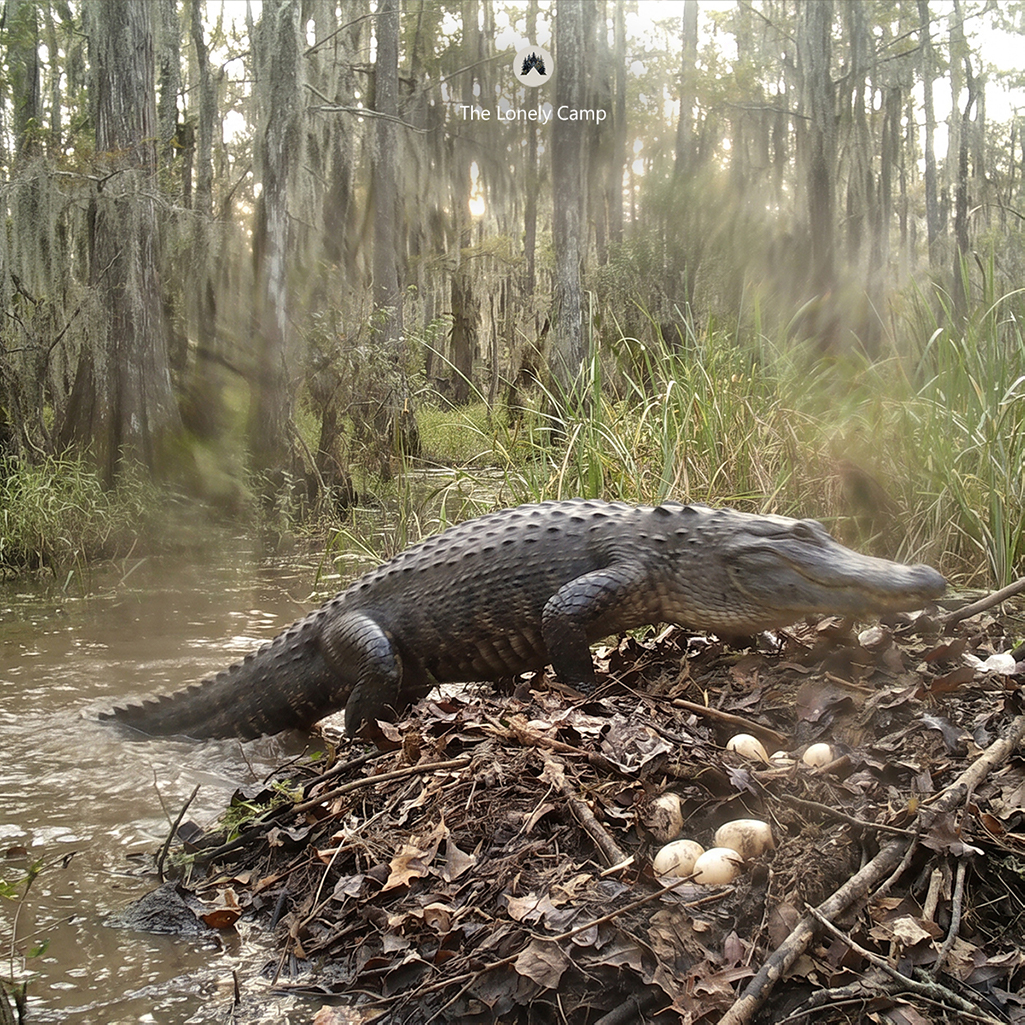
Every summer, licensed alligator farmers in Louisiana head out into the coastal marshes in helicopters and airboats to locate wild alligator nests on private wetlands to collect their eggs. Adult alligators are expensive to keep and do not breed reliably in crowded farm pens, state wildlife managers built an entire industry around borrowing eggs from the wild instead.
The farmers pay the landowners for the privilege of collecting the eggs, a setup that flipped the economics of the swamp overnight. A marsh full of nesting alligators stopped being a liability to drain or shoot and became a reliable cash crop, giving private landowners a direct financial stake in keeping their wetlands intact.
Getting those eggs out of the marsh and into a farm incubator requires careful handling. Unlike a chicken egg, which needs to be turned regularly so the embryo does not stick to the shell, a reptile egg cannot be rolled over once incubation begins. Inside the shell, the alligator embryo attaches itself to the top membrane within the first 24 hours after the mother lays it.
If a collector tips or rotates the egg while pulling it from the mound of rotting marsh grass, the movement tears the developing blood vessels or rolls the heavy yolk right on top of the embryo, killing it. Crews mark the top of every single egg with a pencil or marker the second they uncover the nest and pack them upright in cushioned trays for the ride home.
Back at the farm, temperature controls the rest of the process. Alligators do not have sex chromosomes. Instead, the heat of the incubator during a critical window of development determines whether an egg turns into a male or a female, allowing farmers to dial the thermostat to produce fast-growing animals.
In exchange for taking eggs out of the swamp, farmers owe the state rent in the form of live alligators. Before selling hides and meat, every farmer has to return a set percentage of healthy, farm-grown juveniles back to the exact same stretch of marsh where the eggs were collected.
When Louisiana launched the return program in 1986, biologists estimated that roughly 83 percent of wild alligator hatchlings get eaten by wading birds, raccoons, gars, bullfrogs, and bigger gators before they ever reach four feet long. Based on that math, the state set the initial return quota at 17 percent.
If a farmer took 100 eggs from a marsh and brought back 17 juvenile alligators already grown to roughly three to five feet long, the swamp ended up with the exact same number of surviving young gators it would have produced on its own. At that size, almost nothing in the marsh can kill them except a larger alligator.
The math worked better than the state anticipated. The farm-raised returnees survived at high rates, grew faster than expected, and started breeding earlier. Coastal nest counts climbed from fewer than 10,000 in the 1970s to more than 60,000 in recent years. Because the wild marshes were filling up with alligators, the state steadily lowered the rent, cutting the return requirement from 17 percent down to 14 percent, then 12, then 10, and eventually proposing a drop to just 5 percent.
Since the state began tracking the program in 1972, workers have pulled more than 11 million wild eggs out of Louisiana's marshes, sold 7.3 million farm-raised animals, and turned more than 1.2 million juvenile alligators loose in the swamp to pay the tab.
Image is for illustration purposes only.
Source: Associated Press / LSU AgCenter / Louisiana Department of Wildlife and Fisheries / Louisiana Sportsman.
Louisiana Alligator Egg Program Restores Wild Marsh Populations