
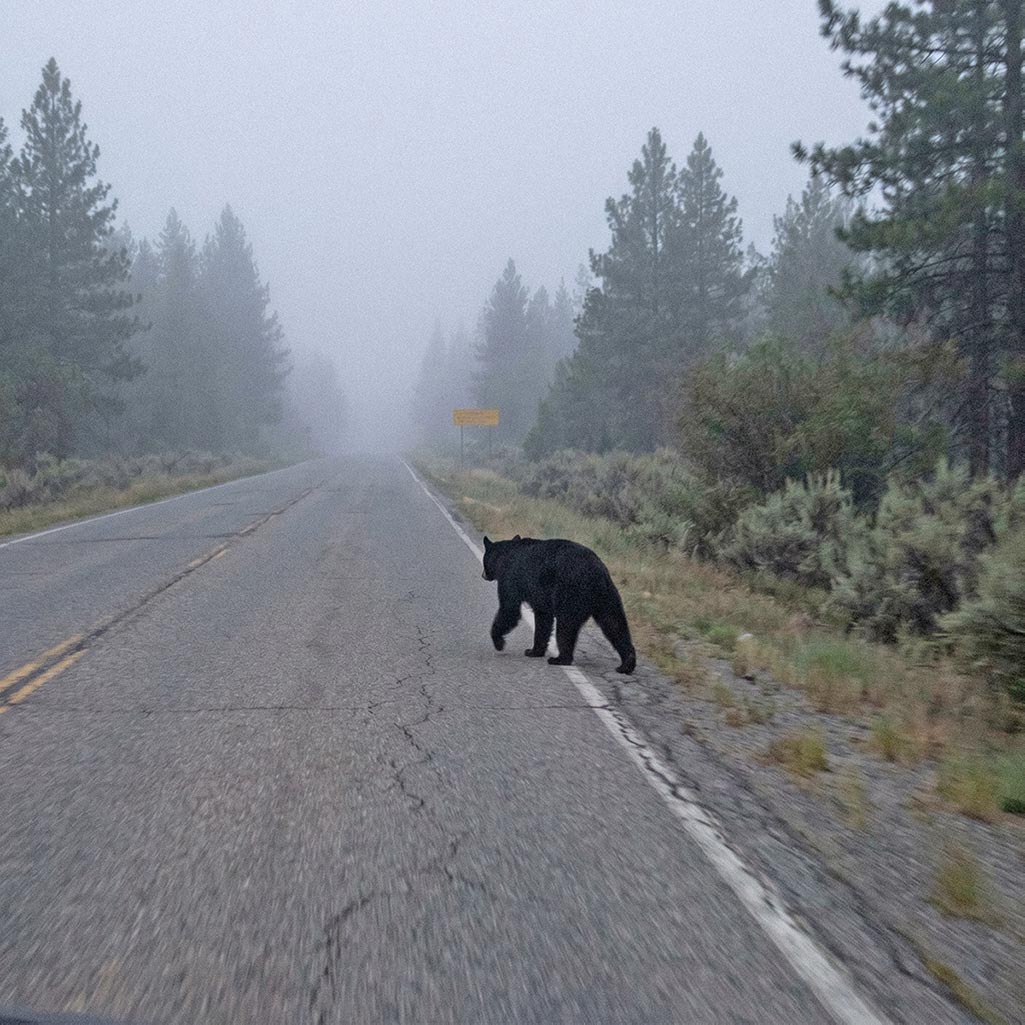
In July 2022, wildlife biologists at Great Smoky Mountains National Park trapped a five-year-old female black bear at a backcountry campsite. She had been getting too comfortable around people. Taking food. Showing up where she should not have been showing up. They fitted her with a GPS collar and drove her sixty miles south to the Cherokee National Forest in eastern Tennessee.
They released her and expected her to stay.
She did not stay.
The GPS collar recorded what happened next. Within days of being released, Bear 609 started moving. Not wandering. Moving. South through Tennessee. Across the Georgia state line. Through the outskirts of Atlanta. She was filmed at a dumpster behind a steakhouse in Alpharetta, Georgia, eating whatever had been thrown out that night. She was spotted near a shopping mall. She kept going.
She crossed into South Carolina. Then back into North Carolina. Then back into Tennessee. She swam across nine bodies of water. She crossed thirty-three major roads. She was hit by a car somewhere along the route and survived. She never stopped moving long enough for anyone to intervene.
Six months and roughly a thousand miles after she was released in the Cherokee National Forest, her GPS collar pinged from a location the biologists recognized. She was back at the campsite. The exact campsite. The same backcountry site in Great Smoky Mountains National Park where she had been trapped and removed six months earlier. She had walked a thousand miles across four states and come back to the precise spot she had been taken from.
Bill Stiver, the park’s supervisory wildlife biologist, called her movements “bizarre.” He said she never slowed down. The route she took was nearly five times longer than the previous record for a relocated bear in the park’s tracking history. The previous record was 215 miles. She did a thousand.
Nobody knows why she took the route she did. A straight line from Cherokee National Forest back to the park is about fifty miles. She walked twenty times that distance. She went south when the park was north. She crossed state lines that had no reason to be crossed. She circled through suburbs and farmland and forest and highway for half a year before ending up exactly where she started.
There is a detail in the research that is easy to miss. Two-thirds of the bears relocated from Great Smoky Mountains National Park die within four months. They are hit by cars. They are legally hunted in states where hunting is permitted. They are shot by landowners after causing property damage. Relocation is not the happy ending most people imagine it to be. The biologists know this. They track the collars and watch the signals go still, one by one, in places far from the park.
Bear 609’s signal did not go still. She was hit by a car and kept walking. She passed through hunting country and was not shot. She crossed thirty-three roads and was not killed on any of them. She ate from a dumpster in suburban Georgia and no one called animal control.
She walked a thousand miles and she is still alive.
The biologists at Great Smoky Mountains have not relocated her again. Her collar is still transmitting. The last they checked, she was somewhere in the woods near the park, doing what she has always done. Finding her way back to the place she decided was hers.