
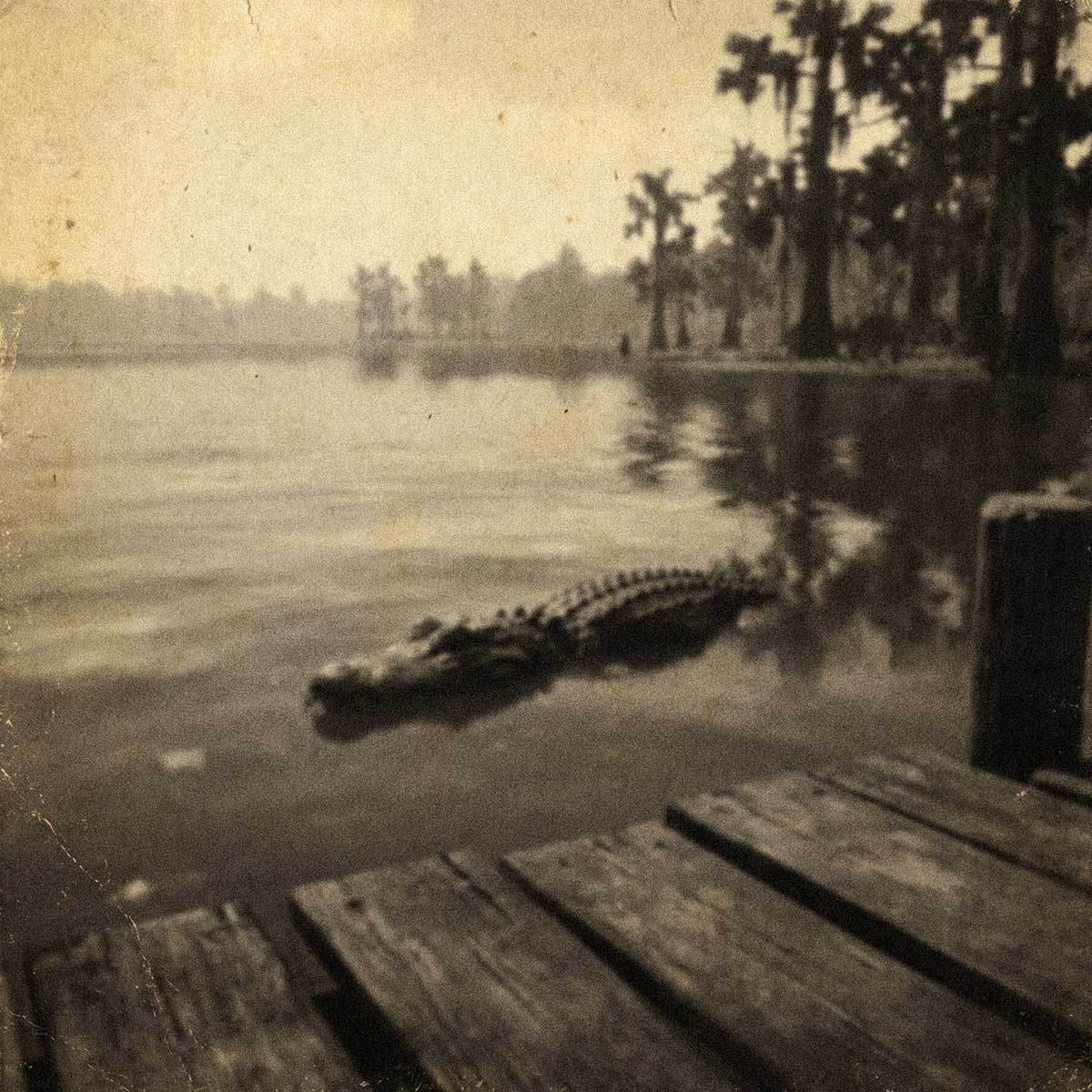
A fourteen-year-old girl jumped off a dock in central Florida, was grabbed by the leg by an alligator before she hit the bottom, pulled underwater, broke free, was seized again in the side, broke free again, and made it to shore with the alligator following her onto dry land.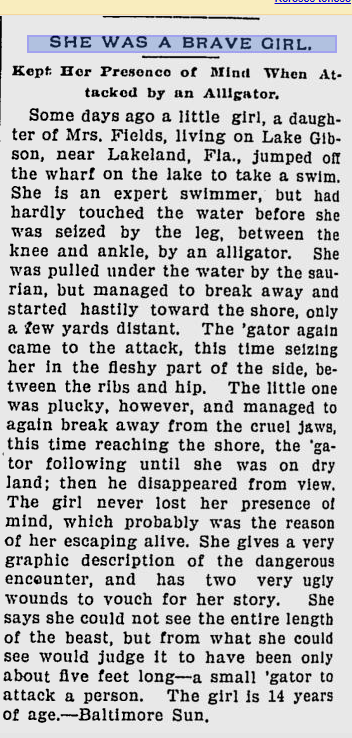
This was published in the Grand Junction News on November 11, 1899, reprinted from the Baltimore Sun. The original dateline is Lake Gibson, near Lakeland, Florida. The girl was a daughter of Mrs. Fields. The newspaper did not print her first name, because in 1899 a fourteen-year-old girl surviving an alligator attack warranted eight column inches and a headline, but not a full name.
“SHE WAS A BRAVE GIRL.
Kept Her Presence of Mind When Attacked by an Alligator.
Some days ago a little girl, a daughter of Mrs. Fields, living on Lake Gibson, near Lakeland, Fla., jumped off the wharf on the lake to take a swim. She is an expert swimmer, but had hardly touched the water before she was seized by the leg, between the knee and ankle, by an alligator. She was pulled under the water by the saurian, but managed to break away and started hastily toward the shore, only a few yards distant. The gator again came to the attack, this time seizing her in the fleshy part of the side, between the ribs and hip. The little one was plucky, however, and managed to again break away from the cruel jaws, this time reaching the shore, the ‘gator following until she was on dry land; then he disappeared from view.
The girl never lost her presence of mind, which probably was the reason of her escaping alive. She gives a very graphic description of the dangerous encounter, and has two very ugly wounds to vouch for her story. She says she could not see the entire length of the beast, but from what she could see would judge it to have been only about five feet long—a small ‘gator to attack a person. The girl is 14 years of age.—Baltimore Sun.“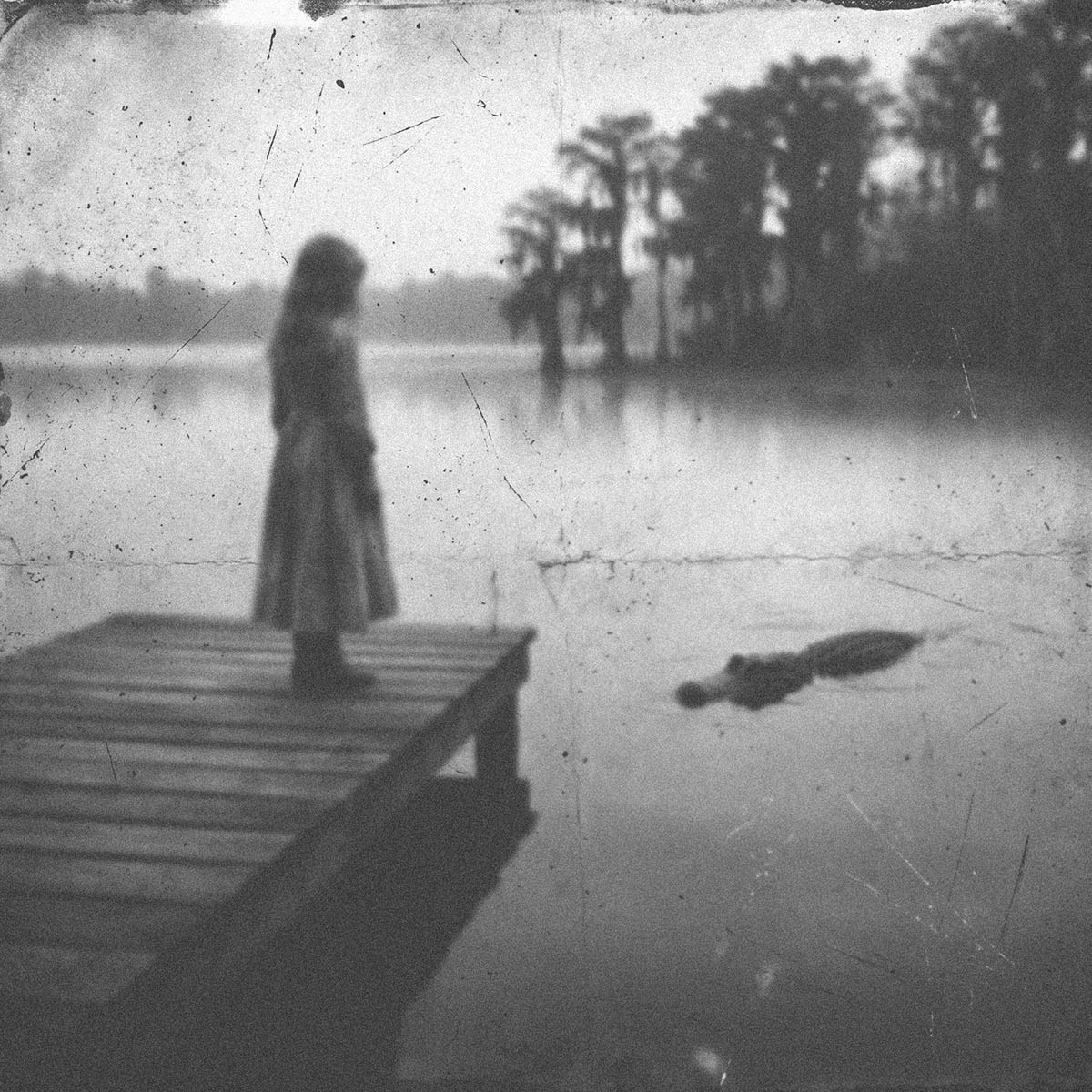
Lakeland, Florida in 1899 was cattle country and citrus groves built on the edges of lakes that were full of alligators. The girl who jumped off the Fields family dock that morning grew up swimming in water she shared with them. She knew what had grabbed her. She did not panic because panicking in that water, in that era, was not an option anyone taught their children.
Alligator attacks on humans in Florida were a routine hazard of daily life throughout the nineteenth century in a way that modern readers struggle to appreciate. The state was not yet developed. The interior was a network of lakes, swamps, rivers, and coastal marshes, and every body of freshwater held alligators. People swam in them because there was no alternative. Children grew up swimming in lakes where alligators were visible from the dock. The risk was understood and accepted the same way rattlesnake bites and malaria were understood and accepted. You lived with it because you lived there.
The alligator population in Florida in 1899 was significantly larger than it is today, despite the modern perception that alligators are everywhere in the state. By the early twentieth century, commercial hide hunting had begun reducing the population dramatically. Between the 1880s and the 1960s, millions of alligators were killed for their skins. By 1967, the American alligator was listed as endangered. The population recovered after federal protection, and today Florida is home to an estimated 1.3 million alligators spread across all sixty-seven counties.
Despite that massive population, fatal alligator attacks remain statistically rare. Florida averages roughly seven to eight unprovoked bites per year that are serious enough to require medical treatment. Fatal attacks average less than one per year over the last two decades. The risk is real but it is low relative to the number of people and the number of alligators sharing the same landscape.
The behavioral profile of an attacking alligator has not changed since 1899. Alligators are ambush predators that strike from the water at targets near the shoreline. They do not chase prey on land for any significant distance. The grab-and-pull technique the Fields girl experienced, seized at the water’s edge, dragged under, released, seized again, is consistent with the feeding behavior of an alligator testing whether a target is manageable. A five-foot alligator attempting to take a fourteen-year-old girl was overmatched and likely released its grip both times because it could not complete the drowning sequence on a target that large. A ten or twelve-foot adult alligator in the same situation produces a very different outcome.
The modern guidance from the Florida Fish and Wildlife Conservation Commission is straightforward. Do not swim in freshwater at dawn, dusk, or after dark, which are peak alligator feeding hours. Do not swim near vegetation or overhanging banks where alligators rest. Never feed alligators, because a fed alligator loses its natural avoidance of humans and begins associating people with food. Keep dogs and small children away from the water’s edge. The Fields girl in 1899 had none of this guidance available to her. She jumped off a dock in broad daylight into a lake she swam in regularly, and the alligator was waiting under the wharf.