Why the mountain lion under the Los Feliz house made headlines around the world, and what his life actually looked like before and after that single strange day
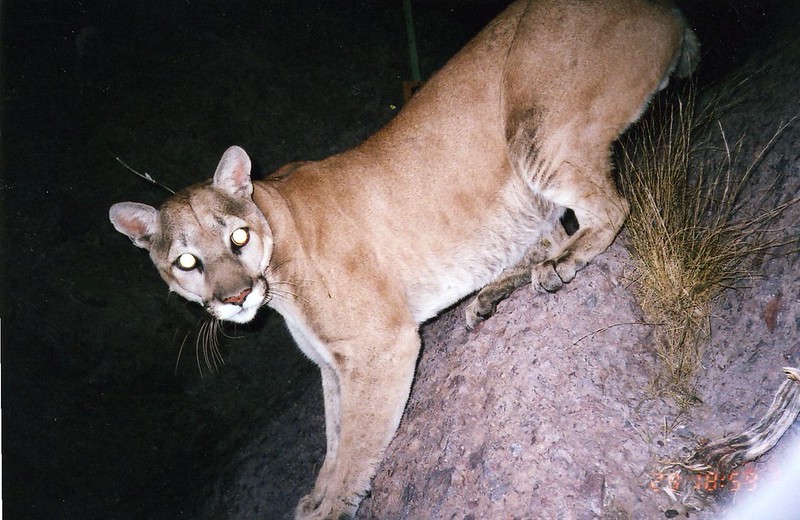
Featured image is an illustration for visual context.
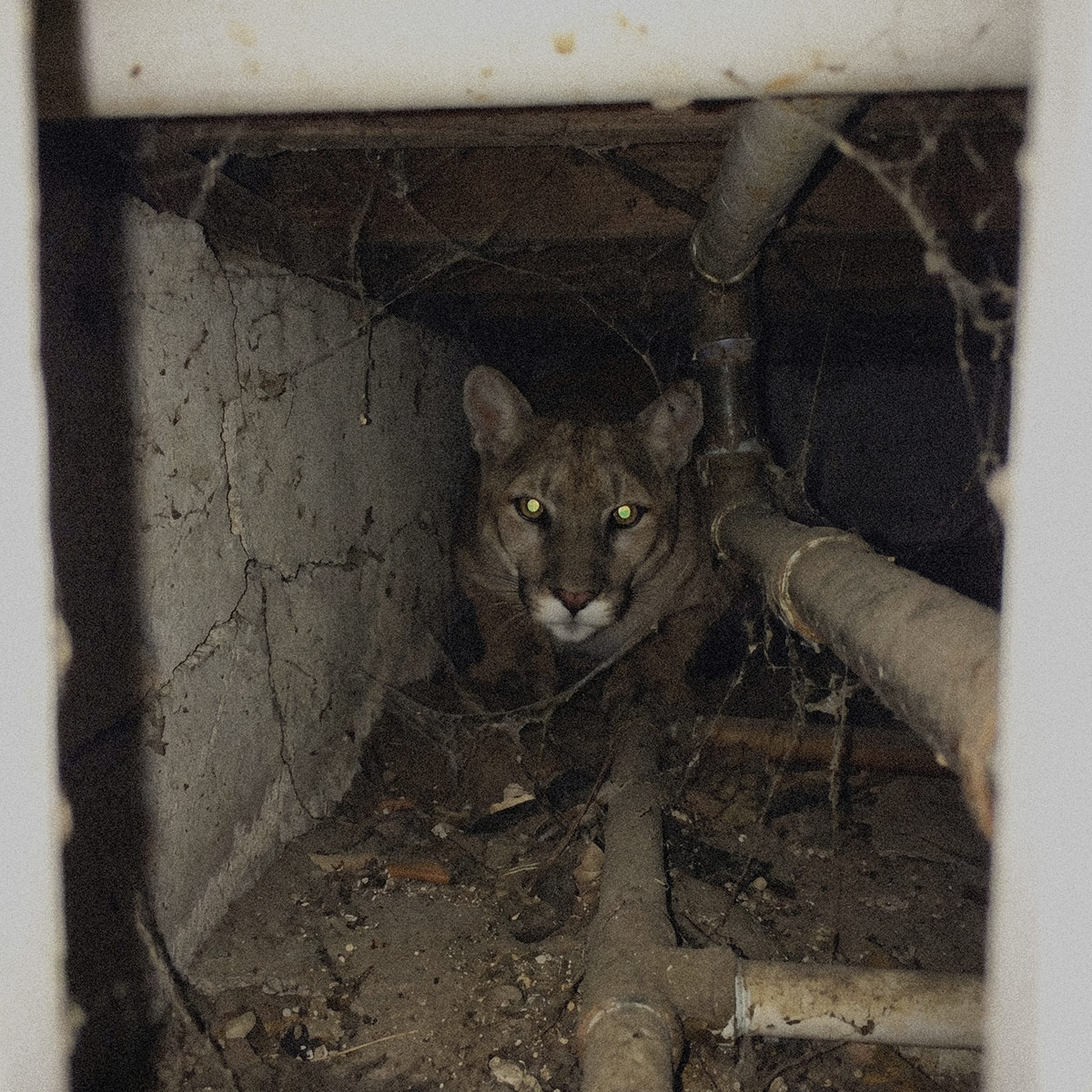
On the morning of April 13, 2015, two workers arrived at a house on Glendower Avenue in the Los Feliz neighborhood of Los Angeles. They were there to install a home security system. One of them crouched down to check the crawl space beneath the house.
Staring back at him from the dark was a full-grown mountain lion.
The man backed out slowly. He was, by one officer’s account, white as a ghost (KTLA, April 14, 2015). The homeowners were called. The city was called. The state was called. Within a few hours, news helicopters were circling the house and a small army of wildlife officials, reporters, and neighbors had gathered in the street.
The cat under the house was not just any mountain lion. He was P-22. And by 2015 he was already the most famous wild predator in America.
If you have seen our recent Facebook post about this story, a few of you had excellent questions about what actually happened that day, how scientists tracked him, and what became of him. This article is the long answer.
How scientists knew he had only been there for a day
One reader asked a sharp question under the original post. How could anyone really know P-22 had only spent a day under that house? For all anyone knew, he could have been coming and going for weeks.
It is a fair question, and the answer is one of the most interesting parts of P-22’s whole story.
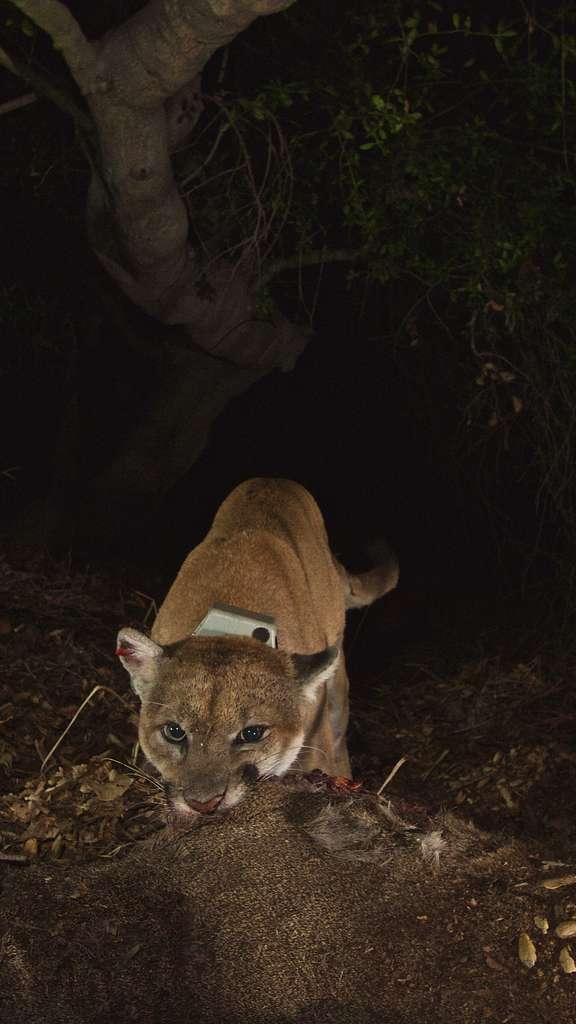
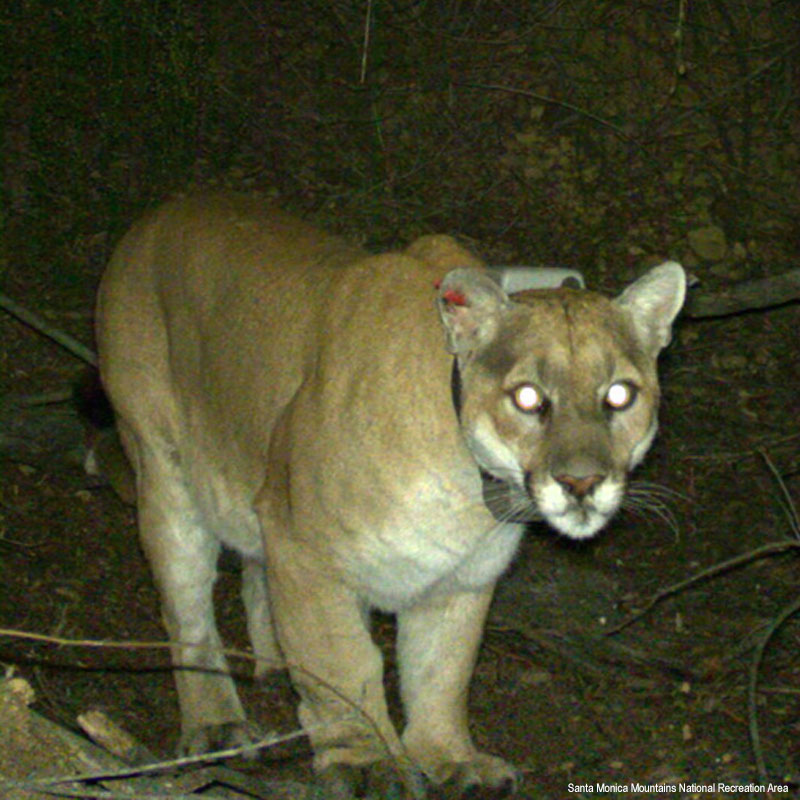
Since March 2012, P-22 had been wearing a GPS tracking collar fitted to him by biologists with the National Park Service (NPS Puma Profiles). The collar was programmed to record his location eight times in every 24-hour period, mostly during the evening and overnight hours when mountain lions are most active (NBC Los Angeles, April 2015). Each of those data points was transmitted to a satellite and logged in a database.
By April 2015, the biologists had three years of continuous location data on this one cat. Eight points a day, every day, for over a thousand days. They knew where he slept. They knew where he hunted. They knew which canyons he preferred, which ridges he crossed at night, and which residential streets he occasionally walked down.
The morning he was found in Los Feliz, they had a GPS fix placing him inside Griffith Park at 6:00 a.m. He was not yet at the house. By the time he was discovered in the crawl space a few hours later, his collar could no longer transmit a signal, because concrete foundations and steel pipes block satellite reception. At 2:00 a.m. the following night, his collar picked up again. He was about a mile and a half away, back inside Griffith Park, heading for his usual resting areas (NBC Los Angeles).
So the total window during which he could have been under the house is roughly 20 hours. Most of that window was public, watched by officers and cameras. The actual quiet time he spent under the house before anyone noticed him was probably only a few hours at most.
As for whether he had been there before, Seth Riley, one of the NPS biologists who studied him, gave the clearest answer in an interview afterward. The data showed P-22 was not living in that neighborhood. He spent the overwhelming majority of his time inside Griffith Park, and his movement history showed he had only wandered into that specific Los Feliz neighborhood once or twice in three years. That particular house had never before appeared on his map (University of California Newsroom, May 2015).
He was not a frequent visitor. He was a stranger who had, on that one day, decided to try a new place to rest.
The freeway crossings that made him a miracle
Another reader pointed out, correctly, that P-22 was a lucky cat to have crossed all those freeways and survived. This part of his life is the reason he became a conservation icon.
P-22 was born around 2010, in the western part of the Santa Monica Mountains, a rugged range west of Los Angeles. His father was another collared mountain lion known as P-1, the first puma the National Park Service ever studied in the region (Wikipedia: P-22). Like all young male mountain lions, P-22 was driven out of his birth territory by the time he was about two years old, because adult males do not tolerate younger males in their range. He had to find his own land.
The problem is that there is almost no mountain lion land left in Los Angeles County, and the land that does exist is cut into small pieces by freeways. To leave the Santa Monica Mountains and go anywhere else, a young cat has to cross pavement. A lot of pavement.
P-22 crossed two of the worst. He somehow made it across Interstate 405 and then U.S. 101, two of the busiest freeways in the country, each carrying hundreds of thousands of vehicles a day. Genetic testing of his DNA later confirmed the journey. He had come from the west, which meant he had threaded through ten or more lanes of traffic, twice, and survived (Informed Infrastructure, 2025).
At least a dozen other mountain lions in the same study were hit and killed attempting similar crossings (Wikipedia: Wallis Annenberg Wildlife Crossing). P-22 was the exception that proved the rule.
He ended up in Griffith Park. It is a patch of wild hills in the middle of Los Angeles, adjacent to the Hollywood Sign, about eight square miles of chaparral, scrub oak, and steep canyons. Adult male mountain lions normally need somewhere between 100 and 150 square miles of territory to thrive. Anything under 30 square miles is usually considered unsustainable. P-22 had nine (Los Angeles Almanac).
He made it work for ten years anyway. It was the smallest documented home range of any adult male mountain lion in the history of the species (NPS Puma Profiles). Biologists expected him to leave or die within a few months. He stayed for a decade.
The collar on his neck
A few readers wondered whether the tracking collar ever bothered him. It is a reasonable thing to worry about.
The collar P-22 wore for most of his life weighed about one pound. It was made of polyurethane, plastic, and metal, and it sat around the loose fur of his neck the way a large leather collar sits on a big dog (Friends of Griffith Park).
Biologists replace these collars periodically, usually every 22 months or so, because the batteries run out. Replacing one requires tranquilizing the animal, removing the old collar, fitting a new one, and taking the opportunity to draw blood samples and check the cat’s overall health.
P-22 was captured and re-collared about six times in his life. Each time, biologists used the moment to check on him. In 2014, one of those captures probably saved his life. They found he had developed a serious case of mange, which is a parasitic skin disease. In mountain lions in urban areas, mange is often linked to rat poison. When a mountain lion eats small prey that has eaten poisoned rats, the toxins accumulate in the cat’s system and suppress its immune response. Biologists treated P-22 with medication and vitamins. He recovered fully (Los Angeles Almanac). Without the collar and the check-ups it allowed, he almost certainly would have died years earlier.
Wildlife biologists who have studied collared mountain lions for decades say the animals adapt to the collar within hours. They groom around it, hunt with it, sleep with it, and show no long-term behavioral changes. The collar looks bulky to us because we are small and thin-necked. On a 120-pound cat with thick fur and dense muscle, it sits like a loose necklace.
The tennis balls and the bean bags
One of the most-discussed details of the 2015 crawl space standoff was the removal effort itself. Wildlife officials tried to prod P-22 out with long poles. They yelled at him. They shot tennis balls at him with a launcher. They fired bean bag rounds. A reader on our post understandably wondered if there wasn’t a more creative way.
The answer is that every single method they used was chosen specifically because it was the least harmful option available. Nothing about the situation was as chaotic as it looked.
Wildlife biologists have a ladder of escalation they use when a large predator needs to be moved without being killed. The gentlest options come first. Verbal pressure, loud noise, water, rubber projectiles. These are called hazing. The goal is to create enough unpleasantness that the animal decides on its own to leave, because an animal that leaves under its own power is an animal that is not injured, not drugged, and not traumatized.
The next step up is tranquilization. But tranquilizing a 120-pound mountain lion under a concrete house carries its own risks. The drug takes time to work. A partially sedated big cat can still injure people. Once tranquilized, the animal has to be dragged out of a tight space where equipment cannot easily reach, then monitored until it recovers, then relocated. Every step of that process is dangerous for both the cat and the humans.
The absurd-looking approach, tennis balls and bean bags fired from a distance, is actually what the science recommends. It pressures the animal without hurting it. And in P-22’s case, it worked. He left the crawl space on his own, at his own pace, in the dark, without being touched (Slate, April 2015). That is the textbook outcome.
The officers who looked silly on television that day were doing exactly what their training told them to do.
How he died
A reader reminded us that P-22 did not live forever. The full story of his death is worth understanding because it connects to everything else.
In November 2022, P-22 did something he had almost never done in ten years of monitoring. He attacked and killed a small dog being walked on a leash in a residential neighborhood near the Hollywood Reservoir. Then, in the days that followed, there were more close encounters with leashed pets. He was being seen more often, in more populated areas, in ways that did not match his decade of careful, secretive behavior (NPS Puma Profiles).
Biologists recognized the pattern. Mountain lions that suddenly start behaving erratically are usually sick, injured, or both. They decided he needed to be caught for a health check.
On the morning of December 12, 2022, wildlife biologist Jeff Sikich, who had known P-22 for a decade, used his telemetry equipment to locate the cat in a backyard in Los Feliz. He was lying in an overgrown corner of a hillside yard that belonged to a woman named Sarah Picchi. She had seen him there before. He had come home, in a sense, to the neighborhood where he had first become famous seven years earlier (Alta Journal, March 2023).
P-22 did not run when Sikich approached. He lay in the brush and waited. The team tranquilized him and took him first to the Los Angeles Zoo, then to the San Diego Zoo Safari Park for a full evaluation.
The findings were bad. He was severely underweight. His fur was thinning. He had an injury to his right eye. He had serious internal injuries consistent with having been struck by a car, and the night before his capture, someone had reported a vehicle strike involving a mountain lion in the exact area where his collar had placed him. On top of the fresh injuries, he was suffering from long-term health issues that come with age in mountain lions, including kidney disease, heart problems, and parasites (Wikipedia: P-22).
He was, by the standards biologists use, no longer a candidate for release back into the wild. He was also not a candidate for a long life in a sanctuary. The team made the decision that wildlife veterinarians make in cases like this. On December 17, 2022, P-22 was euthanized to end his suffering.
He was about 12 years old. In the wild, most male mountain lions are dead before they reach six.
Los Angeles mourned him in a way that cities rarely mourn wild animals. More than 1,700 people attended his memorial at the Greek Theatre in Griffith Park in February 2023. The Los Angeles Public Library issued a commemorative library card with his image on it. The Los Angeles Times published an obituary that called him “an aging bachelor who adjusted to a too-small space in the big city,” which was exactly the right description (Wikipedia: P-22).
The wildlife overpass P-22 built
A reader mentioned the wildlife overpass in her comment, and this is the part of the story that will outlast all of us.
During his lifetime, P-22 became the face of a campaign to build a wildlife crossing over U.S. 101, the freeway that had nearly killed him on his way into Griffith Park. The logic was simple. If one male mountain lion had managed to cross, but dozens of others had died trying, then the freeway was killing a population slowly by genetic isolation. Mountain lions trapped on the south side of the 101 could not reach mates to the north. Inbreeding was already showing up in the population. Biologists had documented physical abnormalities in isolated cats by 2020 (Wikipedia: Wallis Annenberg Wildlife Crossing).
The solution was a bridge. Not for cars, but for animals. A vegetated overpass wide enough and natural-feeling enough that wildlife would actually cross it.
The project is called the Wallis Annenberg Wildlife Crossing. It spans ten lanes of U.S. Highway 101 in Agoura Hills, about 30 miles west of Griffith Park. When finished, it will be the largest wildlife crossing in the world, 210 feet long and 174 feet wide, covered in native plants grown from seeds collected within a five mile radius of the site (Informed Infrastructure, 2025). Sound walls will quiet traffic noise. The lighting design minimizes glare that would otherwise spook crossing animals. The concrete structure over the freeway itself was completed in June 2025, with more than 26 million pounds of concrete poured (ABC7 Los Angeles, June 2025).
The final phase, extending the crossing over Agoura Road and planting the bridge with living vegetation, is scheduled to finish in fall of 2026 (Office of the Governor of California, February 2026). The project’s leader, Beth Pratt of the National Wildlife Federation, said at the final phase groundbreaking that she cannot wait to see the first photograph of a mountain lion on the crossing. Biologists predict animals will start using it almost immediately. An owl was already spotted flying across the unfinished structure in 2024 (Construction Equipment Guide, February 2025).
The crossing cost about 92 million dollars. A little over half came from private donations, most famously from Wallis Annenberg herself, who pledged 25 million and passed away in July 2025 shortly after the first phase was completed. The rest came from state and federal funds and from thousands of smaller donors who were moved by P-22’s story (Informed Infrastructure, 2025).
None of it would have happened without him. He was, as Beth Pratt put it, the cat who took a scientific story and lifted it off the page and made it human.
The thing most people miss about him
The lesson most people take from P-22’s story is the one about conservation. It is a good lesson. Build the crossing. Protect the habitat. Stop using rat poison. Fund the science.
But there is another lesson buried in his life that deserves attention too.
For ten years, a 120-pound predator lived in the middle of Los Angeles. He walked through the Hollywood Hills at night. He hunted deer in ravines behind million-dollar homes. He rested in chaparral a few hundred yards from major roads. He was photographed in front of the Hollywood Sign for a National Geographic cover in 2013. Millions of people drove past his territory every single day, and almost none of them ever saw him.
The world, biologists say, is full of animals doing exactly this. Not just mountain lions. Coyotes, bobcats, foxes, raccoons, owls, hawks, thousands of creatures whose lives run parallel to ours in the same geography, almost entirely invisible. P-22 was not unusual for being there. He was unusual for being seen.
What he reminded everyone, on one strange day in a Los Feliz crawl space, was that the wild has not actually retreated. It has only gotten quieter. It has learned to move when we are not looking. It sleeps in the hills above our houses and walks the empty streets in the hours before dawn.
We built a city on top of a wilderness and told ourselves we had replaced one with the other. P-22 was the reminder that the wilderness was still underneath us, the whole time, patient, waiting to be noticed.
Sources and further reading
Primary reporting
- KTLA News, “Mountain Lion P-22 Leaves Crawl Space Under Los Feliz Home” (April 14, 2015): https://ktla.com/news/local-news/mountain-lion-p-22-remains-in-crawl-space-beneath-los-feliz-home/
- NBC Los Angeles, “Tracking Data Offering Clues into LA’s Most Famous Mountain Lion’s Whereabouts” (April 2015): https://www.nbclosangeles.com/news/tracking-data-offering-clues-into-las-most-famous-mountain-lions-whereabouts/53536/
- Slate, “Mountain lion P-22 in Griffith Park: The media hassled cougar in crawl space” (April 2015): https://slate.com/technology/2015/04/mountain-lion-p-22-in-griffith-park-the-media-hassled-cougar-in-crawl-space.html
- Alta Journal, “P-22: The Mountain Lion That Captured the Heart of Los Angeles” (March 2023): https://www.altaonline.com/dispatches/a43145984/p-22-mountain-lion-wildlife-los-angeles-denise-hamilton/
Scientific and agency sources
- National Park Service, Puma Profiles: P-22: https://www.nps.gov/articles/000/puma-profiles-p-22.htm
- University of California Newsroom, “Behind the scenes with a Los Angeles mountain lion expert” (May 2015): https://www.universityofcalifornia.edu/news/behind-scenes-los-angeles-mountain-lion-expert
- Friends of Griffith Park: https://friendsofgriffithpark.org/p-22/
- Los Angeles Almanac, Life and Death of P-22: https://www.laalmanac.com/environment/ev704.php
Wildlife crossing project
- Office of the Governor of California, “California closes in on completing the world’s largest wildlife crossing” (February 2026): https://www.gov.ca.gov/2026/02/02/california-closes-in-on-completing-the-worlds-largest-wildlife-crossing/
- ABC7 Los Angeles, “Final construction stage of Wallis Annenberg Wildlife Crossing begins” (June 2025): https://abc7.com/post/final-construction-stage-wallis-annenberg-wildlife-crossing-101-freeway-begins-agoura-hills/16855639/
- Informed Infrastructure, “World’s Largest Wildlife Crossing Nears Completion” (2025): https://informedinfrastructure.com/post/worlds-largest-wildlife-crossing-nears-completion-in-southern-california
- Construction Equipment Guide, “U.S. 101 Wildlife Crossing Nears Completion” (February 2025): https://www.constructionequipmentguide.com/us-101-wildlife-crossing-nears-completion/67155
- Save LA Cougars campaign: https://savelacougars.org/wallis-annenberg-crossing/
- 101 Wildlife Crossing FAQ: https://101wildlifecrossing.org/crossing-faq/
General reference
- Wikipedia: P-22: https://en.wikipedia.org/wiki/P-22
- Wikipedia: Wallis Annenberg Wildlife Crossing: https://en.wikipedia.org/wiki/Wallis_Annenberg_Wildlife_Crossing
For authentic photography of P-22
- National Geographic, “A Cougar Ready for His Closeup” by Steve Winter (2013): The famous Hollywood Sign nighttime camera trap image is archived on Nat Geo’s website and in the Natural History Museum of Los Angeles County’s P-22 exhibit records.
- NPS Santa Monica Mountains National Recreation Area photo archive: https://www.nps.gov/samo/